
























服務熱線
新聞

新聞
這次清華大學的每個人都是首富
2022-03-16
1630
本文轉載自《人工智慧金融與經濟學》。
在中國半導體領域,清華大學無線電工程系(後改為電子工程系)85級是一個特殊的存在。
根據不完全統計,包括紫光集團董事長趙衛國、唯爾科技創始人於仁榮、兆基半導體創始人之一舒慶明、卓盛微電子聯合創始人馮晨暉、格科微電子創始人趙立新、遂源科技創始人趙立東,以及任余志軍、高峰、群衛東、盧輝、劉輝等高管在內的高層。
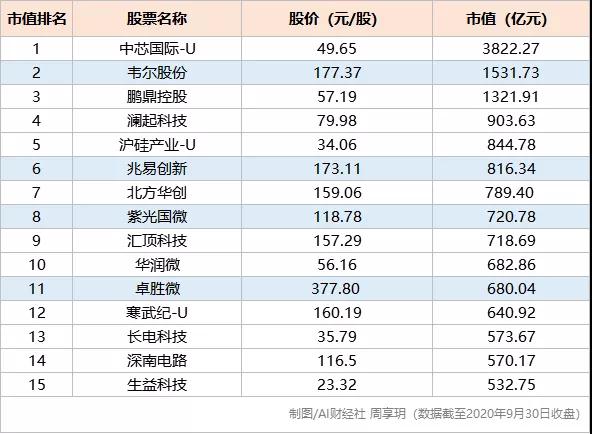
這些人自稱EE85。在中國A股上市半導體公司市值排名前15的公司中,他們共同創立的公司佔據了4個席位,分別是威能科技(Weill Technology)、兆兆半導體(GigaDevice)、紫光展銳(Unisoc)和卓盛微電子(Zhuosheng Micro)。他們的業務範圍涵蓋半導體產業鏈中的晶片設計、製造、封裝和設備。
As of the close of trading on September 30, the total market value of these four companies reached 374.889 billion yuan, accounting for approximately 13.88% of the total market value of A-share semiconductor listed companies.
01
In 1978, with the reform and opening up, China's semiconductor industry gradually entered a stage of comprehensive recovery. At the end of this year, Tsinghua Radio Department returned to Beijing from Mianyang, Sichuan, thus becoming the mainstay of talent cultivation in China's chip industry.
In 1985, a group of first-year radio students moved into Building 10 of the East District Student Dormitory of Tsinghua University.
來自福建泉州的陸煌考入了清華大學,他和來自山西的劉衛東成了室友;而來自家鄉安徽的高峰則和來自江蘇的王宏偉睡上下舖。
Also living in the same building is Zhao Weiguo, who was admitted from Shawan County, Tacheng Prefecture, Xinjiang.
這個從小在新疆和父母一起生活,童年基本上都在餵豬放羊中度過的年輕人,始終不願認輸。他的父親曾為他規劃了一條「相對穩定」的人生道路——學習一門手藝,成為一名食品製作師傅。但意志堅定的趙維國不顧父親的勸告,毅然選擇了高考。
事實上,身為全縣第一個考上清華大學的人,趙衛國確實有值得驕傲的地方。但在人才濟濟的清華大學,這份「資本」可能會「大幅縮水」。
「上大學前,我自認為是個天才,但進了清華大學後,才發現真正的天才另有其人。」趙衛國進入大學後,學業成績一直「穩定」。入學時他班級排名第17,畢業時仍是第17。
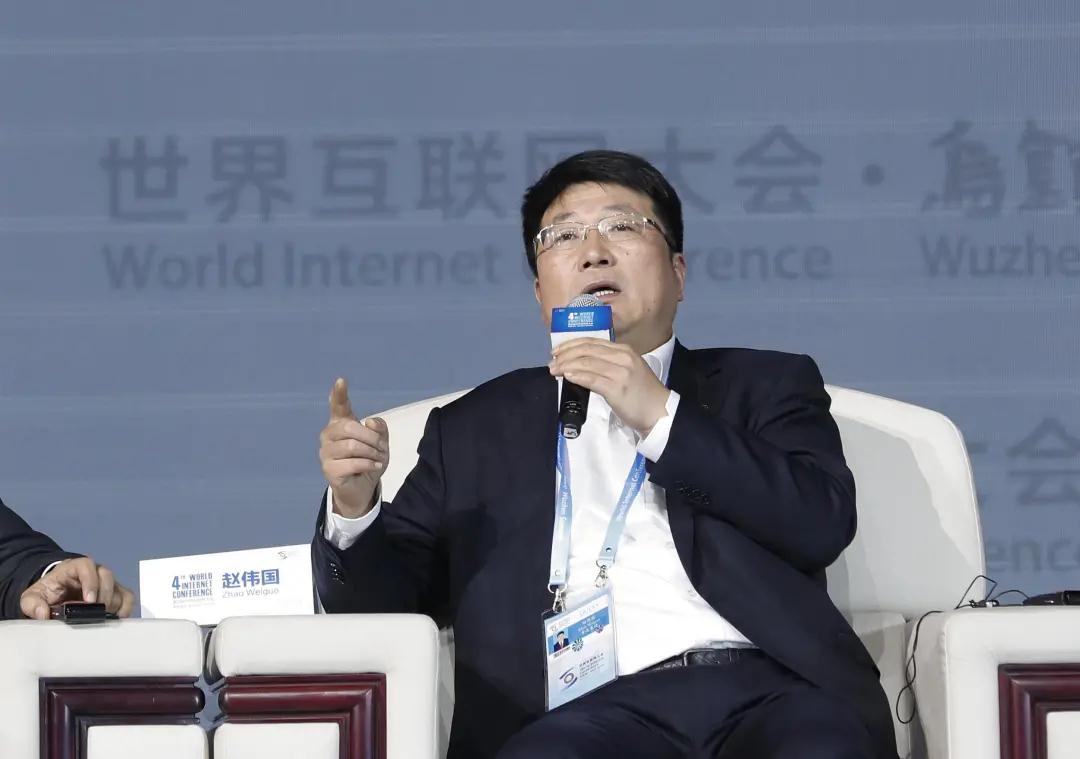
圖片/視覺中國(趙衛國)
Yu Renrong, who also belongs to EE85, can be regarded as the "others" in Zhao Weiguo's words. When he was a freshman, he participated in a school-wide mathematics competition at 8 a.m. the next morning after playing mahjong all night, and finally won the first prize. He usually also does some "small business", such as taking Haidian papers to Baoding to sell them, successfully making himself a relatively wealthy person among his classmates.
Therefore, in the eyes of his classmates, Yu Renrong has always been an "extremely smart person" and extremely sensitive to the market.
值得一提的是,今年餘仁榮和他的同事們恰逢清華大學無線電系試行「不分專業大一、大二」教學模式。因此,在第二年的招生中,無線電係被劃分為半導體、通訊、成像、雷達、微波、光電子和電子物理七個專業方向,共開設九門課程。
However, in the early days of reform and opening up, the country invested its efforts in people's livelihood and heavy industry. Semiconductors were obviously not a popular major, and entry into the semiconductor major depended more on "fate." Wang Hongwei chose the semiconductor major because the teacher and class teacher who recruited him into the radio department were both majoring in semiconductors. Liu Weidong and his roommates Lu Huang and Huang Wenyong were assigned to the semiconductor major.
王宏偉的室友高峰也報讀了半導體專業,另一位室友馮晨輝則被分配到電子物理專業。此外,趙衛國去了微波專業,於仁榮和他的老同學梁傑學習圖像處理,趙衛國的新疆同僚任志軍和來自北京的趙立東則去了通信專業…
At this time, none of this group of young people who were not close to semiconductors obviously knew that they would become the vanguard of China's semiconductor industry in more than 30 years.
02
宿舍窗外的大樹五次變綠,EE85屆的畢業生們終於迎來了畢業季。
在90年代,全球半導體產業的重心從美國轉移到了日本。當時,全球十大半導體公司中有六家來自日本。 NEC、東芝和日立位列全球前三名。英特爾僅排名第四,三星當時甚至還沒有進入前十名。
Japan's semiconductor industry is at its peak, the United States is unwilling to do so, and South Korea is also eyeing it. In this fierce global war, the semiconductor industry has become a hot topic in the United States, Japan and South Korea. However, this "lively" atmosphere has obviously not been transmitted to the country, and the gap between China, the United States, Japan and South Korea in the semiconductor field has become insurmountable. in the country, there are very few jobs corresponding to the semiconductor profession.
After graduating from college, Liu Weidong, who majored in semiconductors, took a suitcase and went to a communications-related position. His roommate Lu Huang returned to his hometown in Quanzhou and worked in a tobacco industry company. Gao Feng and his bunk brother Wang Hongwei chose to continue their studies. The former studied for a master's degree at the Microelectronics Center of the Chinese Academy of Sciences, and the latter did a PhD at the Institute of Microelectronics at Tsinghua University.
In addition to the semiconductor major, students from other majors in the radio department have found their destinations one after another.
余仁榮學的是影像處理專業,他很幸運,畢業那年就加入了浪潮集團擔任工程師。當時,浪潮剛研發出世界上第一台中國產尋呼機,是當時IT領域一顆冉冉升起的明星企業。
However, after only staying at Inspur for two years, Yu Renrong went to a component distributor and served as the sales manager of its Beijing office, where he stayed for 6 years. Until February 1998, he set up his own business and competed with his old club.
趙衛國前往中關村工作,三年後回到清華大學攻讀研究所。碩士畢業後,他被分派到紫光集團擔任自動化工程事業部副總經理。不久後,他調任清華同方,參與了同方上市後的首筆資本運作──收購江西無線電廠。
More people went to the other side of the ocean and began to have a deeper relationship with semiconductors.
Picture/Visual China
1992年,鄧小平視察珠海高新技術留學生企業時,呼籲所有留學生回國。 「想為國家做出貢獻,最好還是回國。」隔年,「支持留學生出國留學,鼓勵回國,保障人員流動自由」的政策被寫入中共十四屆三中全會文件。
正是在這一系列政策出台期間,趙立東赴美留學,畢業後在英特爾的老對手AMD位於奧斯汀的總部工作,直到2014年辭職回國。在此期間,他也參與了AMD中國研發中心的籌建工作(2007年),提前與中國半導體產業建立了聯繫。
高鋒,一位半導體專業的學生,1995年從清華微電子研究所畢業後,進入新加坡特許半導體公司工作。隔年,高鋒的同屋兄弟王宏偉也加入了該公司。這家成立於1987年的半導體公司,曾是繼台積電和聯電之後的世界第三大半導體代工廠。華為目前晶片的困境也正是源自於這家公司。
Chartered Semiconductor Singapore was truly the cradle of China’s semiconductor talents during this period. EE85's Zhao Lixin also joined Singapore Chartered Semiconductor after graduating with a master's degree in 1995 and worked as a process engineer for three years. Then he went to the American chip design company ESS Technology to work as a senior engineer for three years and participated in the R&D and testing of video phone image sensors and DVD chips. After that, he entered the R&D centers of ADI and UTStarcom in the United States and continued to engage in chip design work for two years.
It is worth mentioning that the American ADI Company produces high-precision digital-to-analog and analog-to-digital converters, which are also difficulties that are still being overcome in China.
In the ten years when EE85 went from being in their 20s to turning 30, China launched its first large-scale attack on the integrated circuit industry and launched two "Chinese Core" projects.
1990年,中國啟動了“908工程”,目標是在“第八個五年計劃”(1991-1995年)期間投資2億元人民幣,將半導體製造過程推進到1微米。主要承建公司為無錫華晶半導體,技術購自美國朗訊公司。
然而,這項曾被寄予厚望、旨在使中國更接近世界先進水平的計劃,其實施結果卻不盡如人意。該計畫從啟動到實際投產歷時七年。到1997年完工投產時,華京的技術水準已落後國際主流技術四、五代,月產量僅約800台,投產當年虧損2.4億元人民幣。
In 1995, with the determination to "boost the semiconductor industry even at the expense of others," the state launched the "909 Project" again and decided to invest 10 billion yuan to establish a chip manufacturing production line starting with 8-inch, 0.5-micron process technology, which was mainly undertaken by the joint venture Shanghai Huahong NEC.
This is the largest national investment project in the history of China's electronics industry. Fortunately, Huahong NEC did not repeat the mistakes of Huajing in building the factory in 7 years. Construction started on July 31, 1997 and was completed in February 1999. It achieved profit the same year it was put into production. In the second year, it achieved sales of 3.015 billion yuan and a profit of 516 million yuan.
03
Taking 2000 as the dividing point, China's semiconductor industry began to enter a new stage of development.
On February 27, 2001, Professor Wang Yangyuan, academician of the Chinese Academy of Sciences and director of the Institute of Microelectronics of Peking University, gave a high-level report on "Microelectronics Science and Technology and Integrated Circuit Industry".
After the report, the leaders attending the meeting came to a conclusion: integrated circuits are the "heart" of electronic products, and the integrated circuit industry must be vigorously developed.
In the same year, the government issued a document to encourage the development of the integrated circuit industry, which is also known as "Document No. 18" in the semiconductor field. The following year, it issued "Document No. 51" and successively approved seven national integrated circuit design industrialization bases. As a result, industry and capital became active.
隨後,大量半導體專業人才陸續聚集,半導體公司如雨後春筍般出現。 EE85人才也在此期間陸續遷移,將他們與中國半導體產業的故事推向了高潮。
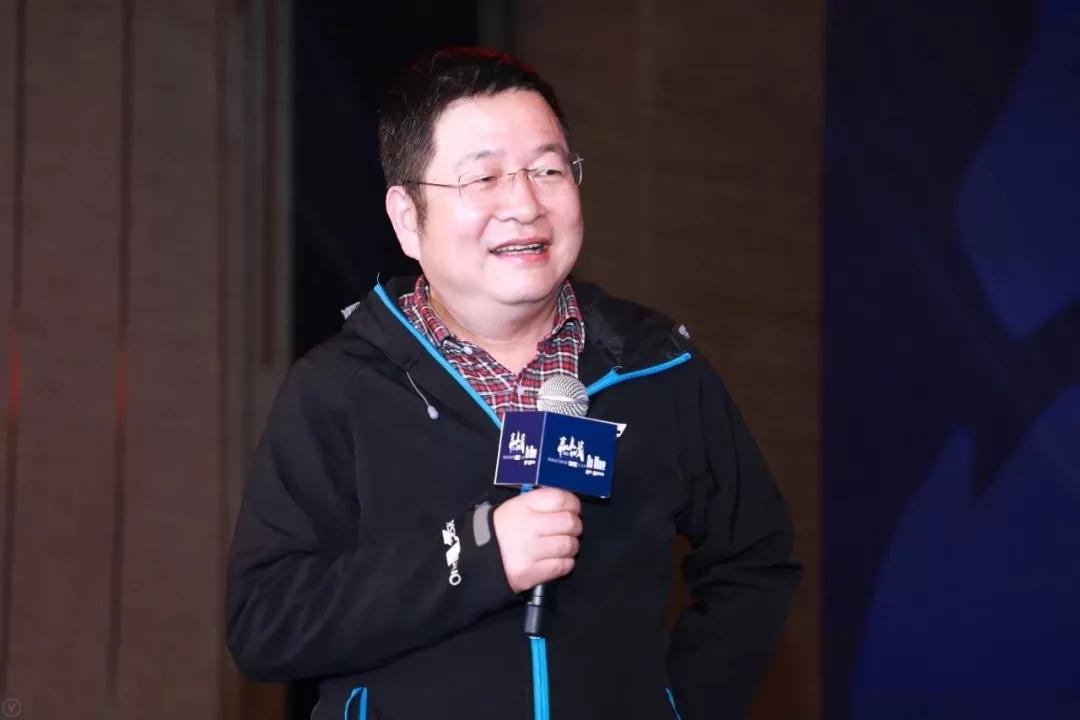
Picture/Weil Co., Ltd. official WeChat public account (Yu Renrong)
2003年,已搖身一變成為「餘老闆」的餘仁榮,偶然得到美國晶片公司安森美半導體(ON Semiconductor)一位高層的指導,開始調整經營理念。除了繼續經營原有的電子元件分銷業務外,公司也開始提供設計解決方案,成為產業先鋒。他也在全國各地設立辦事處,與包括德信無線(Dexin Wireless)在內的新興設計公司合作,德信無線如今已成為中國最大的手機設計供應商。
隨著手機市場的蓬勃發展,到2006年,餘仁榮已在電子元件分銷領域聲名鵲起,成為北京最大的經銷商。 2007年,餘仁榮抓住市場機遇,升級業務,在上海創立了Vail有限公司。此後,他開始從事半導體分立元件和電源管理晶片的設計。在接下來的幾年裡,他採取了內生式發展與併購結合的策略,很快便獲得了中興、小米、聯想等手機廠商的認可,實現了事業的飛躍。
就在余仁榮接受「專家建議」的同一年,遠在海外的趙立新辭去了UTStarcom的工作,帶著全部積蓄和高中同學投資的2萬美元回到中國,創辦了格科維電子,從相機感測器起家。
In 2005, Gekowei's first product came out and successfully won its first customer - Vimicro, which was gaining momentum at the time, to provide sensors for its computer cameras. However, with the entry of more and more large companies, the pressure on Gekewei doubled. Seeing that it was about to lose money in 2007, Zhao Lixin made an important decision - to enter the mobile phone market.
As Lei Jun said, "go with the flow." At that time, China's mobile phone market was in great shape, with sales of hundreds of millions of mobile phones every year and a double-digit growth rate. By making mobile phone camera sensors, Gekowei began to grow wildly. By 2010, the company's turnover had exceeded US$100 million, and it was successfully selected into the Top 10 integrated circuit designs in China.
Like Zhao Lixin, there is Feng Chenhui who returned to China to start a business. In July 2006, Feng Chenhui and his two friends Xu Zhihan and Tang Zhuang co-founded Zhuosheng Micro in Shanghai. It also focused on making chips for mobile phones. In the early days, it developed mobile TV chips, and later changed its direction to make radio frequency front-end chips. Today, RF front-end chips are hot, and Zhuo Shengwei has become a Huawei mobile phone supplier.
The story of starting a business with an alumnus also happened to Shu Qingming from EE85. In 2004, Zhu Yiming, who graduated from the Department of Physics in 1989, and Shu Qingming, who graduated from the Department of Radio in 1985, were planning to start a business to produce chips. However, they encountered obstacles due to lack of investment.
得知消息後,自動化系校友李軍(85級)不僅幫助他們獲得了100,000萬美元的創投,還介紹他們認識了經濟系校友薛軍(83級)。憑藉這筆投資,舒慶明和朱一鳴於2005年創立了中國第一家記憶體和晶片研發公司-兆電子(GigaDevice)。
當其他EE85屆校友回國創業時,趙衛國也於2004年離開紫光,帶著1萬元的啟動資金回到家鄉新疆淘金。隔年,北京建坤投資集團股份有限公司成立,主要投資房地產及礦產。趙衛國是最大股東兼董事長,成為名副其實的「房地產開發商」和「煤炭大亨」。
He later recalled, "Getting into real estate at that time was like grabbing money. I took 1 million yuan to Xinjiang, and when I came back, I had earned 4.5 billion yuan, a profit of 4,500 times!"
When Zhao Weiguo found his first pot of gold, Ziguang Group gradually encountered operating difficulties and was on the verge of bankruptcy. Leaders who saw Zhao Weiguo's ability to make money wanted him to "return", and Zhao Weiguo was not averse to renewing his relationship with Ziguang. In 2009, Zhao Weiguo returned to Ziguang Group as president.
由趙衛國實際控制的建坤投資也獲得了紫光集團49%的股權,僅次於清華控股股份有限公司的51%。儘管原股東因優先認購權問題感到不滿,但趙衛國最終成功接管了紫光集團,紫光集團從此進入了趙衛國時代。
04
2014年是中國4G網路開通的第一年,也是智慧型手機快速發展的一年。
This year, two major events occurred in China’s semiconductor industry. One is that in September 2014, the state established a "big fund" for the integrated circuit industry. For the first time, state capital drove private capital to invest heavily in the domestic semiconductor industry.
The other thing is that Ziguang Group, under the helm of Zhao Weiguo, included semiconductors as the company's main direction. After going around and around, Zhao Weiguo returned to his old profession. Tsinghua Unigroup used a "dark horse" approach to acquire mobile phone chip companies Spreadtrum and RDA, which had returned from the privatization and delisting of Nasdaq in the United States. Tsinghua Unigroup has also risen from a layman to become the third company in the world in mobile phone baseband chip shipments. It was preceded by Qualcomm and MediaTek.
從那時起,「買買買」就成了趙維國的生活準則。光是2013年至2018年的五年間,紫光集團就投資收購了16家公司,耗資數千億元人民幣,其中11家涉及晶片領域。光是2015年的前八個月,紫光集團的對外投資收購金額就達到了50億元人民幣,這讓趙維國贏得了「餓虎」的稱號。
Also around 2014, Liu Weidong and Liang Jie started their second entrepreneurial ventures. The former founded Jiuhao Electronics, focusing on sensor signal conditioning chips, while the latter aimed at the Internet of Things market and founded Sicun Technology, focusing on Wi-Fi and Bluetooth communication modules.
It is worth mentioning that the first investment Liu Weidong received when he founded Jiuhao Electronics came from his former college roommate Lu Huang. In addition to investing in Jiuhao Electronics, Lu Huang was also an early investor in Weill and GigaDevice. It has to be said that Lu Huang’s investment won in the internal circulation.

Picture/Visual China
Around 2017, domestic semiconductor companies sounded the clarion call for their second listing. The first wave of listings occurred 10 years ago. At that time, Vimicro and Spreadtrum successively listed on Nasdaq. Deng Zhonghan of Vimicro also became the first listed company boss to sign in Chinese on Nasdaq. After 10 years of energy accumulation, EE85 has done its part in the second wave of listings. However, most of them chose the A-share market.
2016年8月18日,舒慶明聯合創辦的GigaDevice在上海證券交易所上市;2017年5月4日,由余仁榮創辦的Vail公司成功在上海證券交易所上市,一年後收購了清華校友陳大同合創的影像感測器晶片公司OmniVision Technology;2019年收購了清華校友陳大同早十日盛財晶片公司。
On one side is access to the capital market, and on the other side is a new wave of entrepreneurship.
At the end of 2017, Ren Zhijun resigned from Zhao Weiguo and founded Xinhenghui Electronic Technology Co., Ltd. in Shandong, with the goal of "going public." According to the Tianyancha APP, the company has a registered capital of 167 million yuan and is China's first smart card packaging carrier tape manufacturer. Among them, the largest investment came from old classmate Yu Renrong, with an investment amount of 56.432 million yuan, holding 33.86% of the shares, and Ren Zhijun’s investment amount was 28.216 million yuan, holding 16.93% of the shares.
At the same time, Zhao Lidong also resigned from his position as vice president of Ziguang Group and established Suiyuan Technology in March 2018, focusing on the field of artificial intelligence chips and stepping into the wave of the times.
On May 15, 2019, the U.S. Department of Commerce issued a ban on Huawei. China's semiconductor industry entered a wartime state, and an unprecedented consensus was reached on the important strategic position of the semiconductor industry. In June, the Science and Technology Innovation Board held an opening ceremony to support the development of key core technology companies in line with the national strategy. Chip companies are the top priority. Since then, Huawei has adjusted its procurement strategy, shifting from selecting the world's top chip suppliers to supporting domestic companies. In October, the second phase of the National Integrated Circuit Fund was registered and established, focusing on supporting equipment and materials...
The EE85 class is destined to shoulder a greater historical mission.
Even those who are the latest to start a business are no exception. In December 2019, Zhao Lidong’s Suiyuan Technology released its first AI training chip, entering the chip market such as Nvidia. Ren Zhijun's Shandong Xinhenghui is on the right track. The new high-precision etched metal lead frame project planned to be completed in May 2022 will realize domestic substitution after completion...
Level EE85 is undoubtedly lucky. When I entered the industry, it was all due to fate, but when I was in the prime of life, I stepped on the trend of the times and created a new wave of wealth myths. In the "2020 Hurun Global Rich List" announced on February 26, 2020, Yu Renrong ranked 281st on the list with a net worth of 50 billion yuan, becoming the well-deserved richest man in China's chips, while Zhao Weiguo ranked 729th on the list with a net worth of 25 billion yuan.
註:本文轉載自網絡,支持智慧財產權保護。轉載請註明原出處及作者。如有侵權,請聯絡我們刪除。
公司電話號碼:+86-0755-83044319
傳真:+86-0755-83975897
郵箱:1615456225@qq.com
QQ:3518641314 李經理
QQ:332496225 邱經理
地址:深圳市龍華新區民治大道1079號展濤科技大樓C座809室
相關推薦
雲帆瑞達李剛專訪:毫米波雷達產品的精準性與人文關懷
2026-07-22
2479
明年見! | Slkor 出席 2026 年中國電子音樂節精彩回顧
2026-07-14
2171
射頻激情,匠人之路:三十餘載的堅定奉獻-金海姆首席工程師秦宏祥先生訪談錄
2026-06-26
2654
數萬家企業選擇中國品牌-金海姆和斯爾科在全球暢銷!
2026-06-24
2400
兩連冠之後,我們仍在進步-Slkor專訪孫高飛
2026-06-11
2412





 粤公网安备44030002007346号