
























Service Hotline
News

News
Introduction to Hall Effect Sensor
2024-12-06
2325
What is a Hall Effect Sensor?
The Hall Effect Sensor is an essential electronic component that plays a critical role in various industrial and consumer applications. Essentially, it is a type of transducer that senses the presence of a magnetic field and converts this physical phenomenon into a measurable electrical signal. This sensor operates on the Hall Effect, discovered by physicist Edwin Hall in 1879. When a magnetic field is applied to a current-carrying conductor, a voltage is induced across the conductor, perpendicular to both the current and the magnetic field. This voltage is what the Hall Effect Sensor detects and processes.
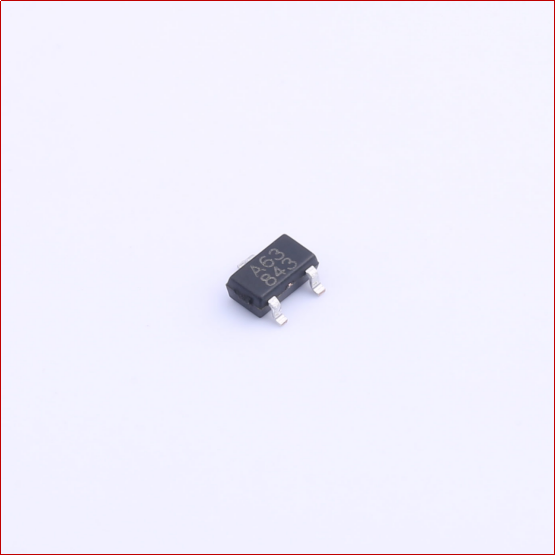
SLSS49E-3 Hall Sensors SOT-23
The Development History of Hall Effect Sensor
The development of the Hall Effect Sensor can be traced back to the late 19th century when Edwin Hall first identified the Hall Effect. However, it wasn’t until the 20th century that practical applications for this discovery were found. In the 1970s, advancements in semiconductor technology enabled the development of small, reliable Hall Effect Sensors that could be integrated into modern electronic devices. Since then, Hall Effect Sensors have found extensive use in various fields, from automotive to consumer electronics, because of their ability to measure magnetic fields without physical contact.
Characteristics of Hall Effect Sensor
The Hall Effect Sensor boasts several characteristics that make it a popular choice in consumer electronics and industrial applications. Some of the primary features include:
- Non-contact operation: It detects magnetic fields without physical contact, which reduces wear and tear and enhances durability.
- High sensitivity: Hall Effect Sensors are sensitive to small changes in the magnetic field, making them ideal for precise measurements.
- Wide operating range: These sensors can function across a broad range of temperatures and magnetic field strengths.
-
Compact size: Due to their small size, they can be easily integrated into various devices, from automotive systems to consumer electronics.
Parameters of Hall Effect Sensor
The performance of a Hall Effect Sensor is determined by several key parameters, which must be carefully considered during selection and integration. Some of the most important parameters include:
- Sensitivity: The degree to which the sensor can detect magnetic fields. A higher sensitivity means the sensor can detect smaller magnetic fields.
- Supply voltage: The voltage required for the sensor to operate efficiently. It varies depending on the sensor model.
- Output voltage: The voltage output is proportional to the strength of the magnetic field detected.
- Response time: This refers to how quickly the sensor reacts to changes in the magnetic field.
- Temperature range: The operating temperature range within which the Hall Effect Sensor will function correctly.
Roles of Hall Effect Sensor in Electronics
Hall Effect Sensors are integral to a wide range of applications in the electronics industry. Their non-contact nature and precision make them indispensable in numerous roles. Common roles include:
- Current sensing: Used in power supply systems to measure the amount of current flowing through a conductor.
- Speed detection: In motors, Hall Effect Sensors are used to detect the rotational speed, aiding in motor control systems.
- Position sensing: These sensors detect the position of moving parts in machines, such as in robotics or automotive applications.
- Magnetic field sensing: Hall Effect Sensors can detect the presence of a magnetic field in a variety of applications, such as in proximity sensors and navigation systems.
Applications of Hall Effect Sensor
There are numerous applications for the Hall Effect Sensor across various industries. These sensors are versatile and reliable, making them suitable for both consumer and industrial uses. Key applications include:
- Automotive industry: Used for position sensing in wheels, crankshafts, and other moving parts, as well as for current sensing in electric vehicles.
- Consumer electronics: Integrated into smartphones, tablets, and other devices for proximity detection, position sensing, and speed monitoring.
- Industrial machinery: Helps in motor control, speed sensing, and position detection in various industrial applications.
- Healthcare devices: Employed in medical equipment for non-invasive measurement of magnetic fields or to detect position changes in machinery.
Manufacturers of Hall Effect Sensor
Several prominent manufacturers produce high-quality Hall Effect Sensors for different applications. Some of the leading companies in this sector include:
- Allegro Microsystems: A leader in Hall Effect Sensor technology, providing a wide range of sensors for automotive and industrial applications.
- Honeywell: Known for producing reliable and durable Hall Effect Sensors used in a variety of fields, including aerospace and automotive industries.
- Infineon Technologies: Offers advanced Hall Effect Sensors that are widely used in automotive, industrial, and consumer electronic applications.
- Texas Instruments: A key player in semiconductor technology, TI manufactures sensors that are often used in automotive and industrial control systems.
When choosing a manufacturer, it is important to consider factors such as sensor type, application requirements, and the reliability of the brand. Leading manufacturers ensure high precision, quality control, and the availability of technical support for integration into electronic systems.
Conclusion
The Hall Effect Sensor is a crucial component in modern electronics and industrial applications. Its ability to detect magnetic fields without physical contact, along with its high sensitivity and reliability, makes it an indispensable tool in a variety of sectors. Understanding its characteristics, parameters, and roles can help procurement and engineering teams make informed decisions when selecting and integrating Hall Effect Sensors into their products.
Related Recommendations
Exclusive Interview with Li Gang of Yunfan Ruida: The Precision of Millimeter-Wave Radar Products and the Warmth of Humanity
2026-07-22
2456
RF Passion, Craftsman’s Journey: Over 30 Years of Steadfast Dedication — Interview with Kinghelm Chief Engineer Mr. Qin hongxiang
2026-06-26
2631





 粤公网安备44030002007346号