
























Service Hotline
Blogs

Blogs

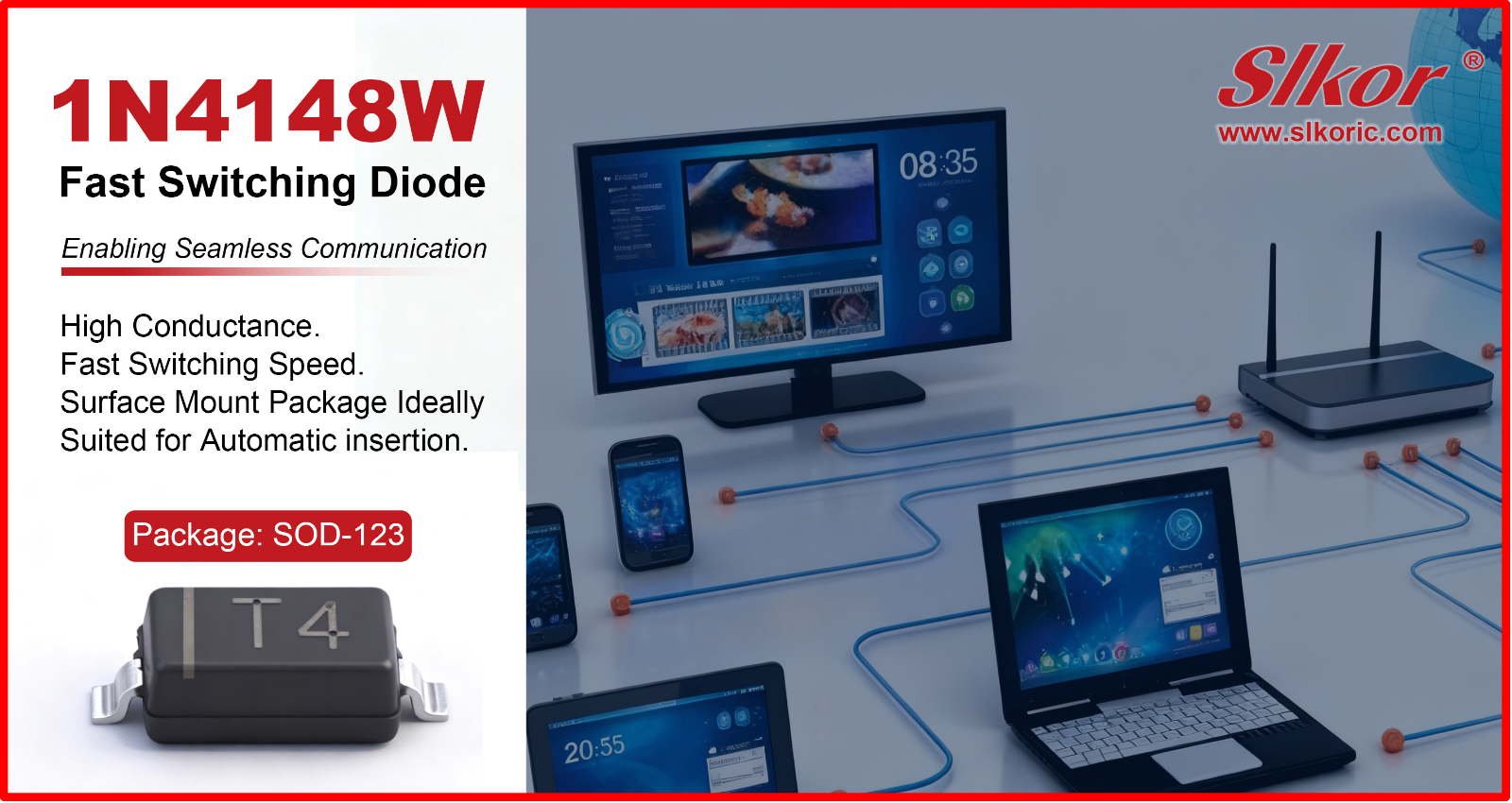
Find a switching diode – get to know the Slkor Micro 1N4148W
2026-09-07
1448
In electronic product design, a single small diode can often significantly impact the overall power consumption, heat dissipation, and signal quality of the device. The 1N4148W switching diode, launched by Slkor Semiconductor, is specifically designed to address these practical challenges. This product features a SOD-123 package and offers characteristics such as fast switching response, low forward voltage drop (VF), and low reverse leakage current (IRM), enabling effective power consumption control while ensuring signal integrity.
1N4148W: Performance Specifications, Product Features, and Application Fields
The Slkor 1N4148W is a general-purpose small-signal switching diode featuring a reverse recovery time of just 4 ns, a forward voltage drop as low as 1.0 V, and a reverse leakage current of 25 nA. The SOD-123 surface-mount package offers a compact board footprint and lightweight design, making it ideal for automated assembly lines and ensuring high soldering reliability. With an operating junction temperature range of-65°C to +150°C, this diode meets the diverse application requirements of switching power supplies, industrial control systems, and consumer electronics.
Core Parameters
Reverse Repeat Peak Voltage (VRRM): 75 V;
Forward average current (IO): 150 mA;
Forward voltage drop (VF): 1.0 V;
Reverse leakage current (IRM): 25 nA;
Reverse recovery time (Trr): 4 ns;
Dissipated power (Pd): 410 mW;
Operating temperature range: -65°C to +150°C.
Product Features
High conductivity with low conduction loss;
Fast switching speed – reverse recovery time of just 4 ns;
Surface-mount package, ideal for automated placement;
Suitable for general-purpose switching applications;
The plastic material meets the UL-approved flame retardancy rating of 94V-O.
Slkor 1N4148W Product Specification Sheet
Primary Application Areas
Consumer electronics: smart door locks, wearable watches, Bluetooth earbuds, portable blood oxygen saturation monitors, etc.;
Industrial control: sensor signal isolation, optocoupler driving, gate protection, relay current continuity, etc.;
Computers and peripherals: the signal control section for motherboards, graphics cards, keyboards, routers, and power adapters.
Product ID
Manufacturer Model
specifications
Brand Name
category
C444720
1N4148W
SOD-123
Slkor (Slkorwei)
switching diode
About Slkor
Shenzhen Slkor Microelectronics Co., Ltd. was founded in 2015 by Mr.Song Shiqiang in Huaqiangbei, Shenzhen. Initially focused on the research, development, and manufacturing of power devices such as silicon carbide MOSFETs and IGBTs, the company has now expanded its product portfolio to include TVS (Transistor-Transistor-Schottky) static protection diodes, Schottky diodes and transistors, as well as the R&D and manufacturing of analog chips—including power management solutions, Hall sensors, and operational amplifiers. The company's core technical team comprises professionals from Yonsei University and Tsinghua University in South Korea. Slkor has obtained certifications including ISO9001, ISO14001, California Proposition 65 compliance, RoHS, and REACH; it maintains a robust quality management system and ensures stable, reliable delivery. Guided by the philosophy "Slkor: Driving the Future with Microelectronics," the "Slkor" brand has provided products and supporting technical services to tens of thousands of customers worldwide. The company's vision is to become an internationally influential and competitive semiconductor enterprise!
"Huaqiangbei Shanzhai Phones" Research (Part III)
2026-09-05
1579
-- by Song Shiqiang of Slkor
To truly understand Shenzhen’s Huaqiangbei, you cannot avoid the "shanzhai phone" phenomenon. In 2007, Huaqiangbei produced and sold 150 million shanzhai phones—one-sixth of global mobile phone output that year—catapulting the district to worldwide fame. Shanzhai phones not only gave birth to Huaqiangbei’s unique maker culture but also helped turn Shenzhen into the "Hardware Silicon Valley," and nurtured brands and design manufacturers such as Wingtech, Coolpad, G5, Longcheer, Transsion, Huaqin, and many others.
After China joined the WTO, enforcement against intellectual property infringement intensified. Huaqiangbei’s shanzhai phone industrial chain had long operated in a semi-underground state, so accessible written materials are scarce, and domestic economists have rarely described or analyzed it. Yet the role of shanzhai phones in making daily life more convenient and in boosting social development is unmistakable. This weighty history—every phone, its makers, and its users—deserves to be seen and recorded.
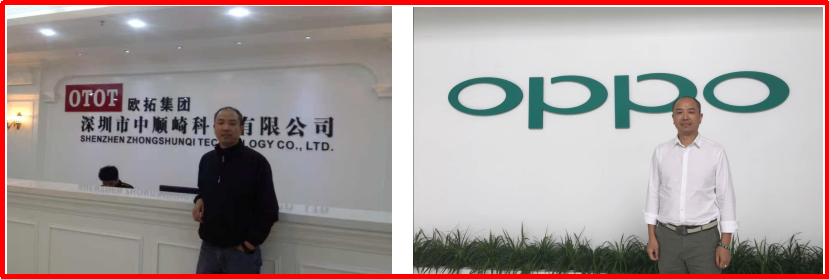
To document this history of Huaqiangbei shanzhai phones as objectively and thoroughly as possible, Song Shiqiang began collecting industry materials early on. In 2014, he visited the factory of OTOT Group in Xixiang’s Jiuwei area; in 2015, he inspected ZTE’s subsidiary Zhongxing Xingyida in Bao’an District’s Xinyongfeng Industrial Park to understand their international supply chain management; and in 2017, he toured OPPO’s factory in Chang’an, Wusha, Dongguan, observing the phone production lines. This article draws on authoritative sources including Harvard Business Review, research from the University of Mississippi and The Catholic University of Korea, combined with first-hand materials Song has gathered over more than a decade of navigating Huaqiangbei. It lays out the phenomena and the underlying economic principles of "Huaqiangbei shanzhai phones," leaving something worthwhile for posterity.
Photos: Song Shiqiang on factory visits to OTOT and OPPO in 2014 and 2017
Continued from Slkor Song Shiqiang – "Huaqiangbei Shanzhai Phones" Research (Part II)
VII. The Great Downfall of Huaqiangbei Shanzhai Phones
Huaqiangbei shanzhai phones rose swiftly and fell just as fast—we saw them build mansions, feast guests, and then collapse. As I, Song Shiqiang of Kinghelm (www.kinghelm.com.cn) and Slkor, see it, this was due to two main factors: the government’s aggressive crackdown and cutthroat competition within the industry. Around 2007, during the feature-phone era, besides the top tier of "Zhonghua Coolpad and Lenovo" (ZTE, Huawei, Coolpad, Lenovo), Shenzhen alone hosted over 20 brands including Konka, Skyworth, Malata, Kejian, Yulong Coolpad, Transsion, Doov, and Gaoke. Nationwide, players included Beijing’s Bird, Xiamen’s Amoi, Huizhou’s TCL, Dongguan’s Gionee, OPPO, and vivo, plus Taiwan’s Dopod—all rushing into this sprawling market. The market rule is that industrial competition often shifts from an unbalanced market with many small players in the early stage to a balanced market dominated by big enterprises, during which many manufacturers are merged or die off, eventually leading to an oligopoly of "winner-takes-all." Huawei’s Yu Chengdong once said that in the future, the world’s phone brands might only be Apple, Samsung, Huawei, and a few others—that’s the logic.
Content and source index for "Shanzhai Phone Archaeology"
After China joined the WTO, domestic market rules gradually aligned with international norms, IP protection became stricter, and campaigns against IP infringement began, dealing the first heavy blow to Huaqiangbei shanzhai phones. One day in 2012, Shenzhen’s Futian police and the industrial and commercial bureau conducted a joint crackdown on the Huaqiangbei shanzhai phone market. Merchants on the upper floors of the Manhattan Digital Plaza, unable to move their goods in time, desperately threw massive quantities of counterfeit Apple and Nokia phones straight out the windows—some even dented the roofs of parked cars. This event accelerated the industry shakeout. The first to collapse were the weaker players, such as BOWAY, OTOT, and Shengnuoda, which I had been tracking. They shifted from high-margin premium smartphones to low-end products like elderly phones, and were forced to retreat to inland rural markets and overseas regions like Southeast Asia and Africa. Their factories gradually relocated to places with cheaper land and labor, such as Yibin in Sichuan, Yichun in Jiangxi, and Huizhou in Guangdong.
Various shanzhai phones from Huaqiangbei back in the day (Source 1: "Old patterns of Shanzhai Phone ")
The second wave came from the legitimate heavyweights. Xiaomi, OPPO, and vivo—larger in scale, lower in cost, more efficient, stronger in branding, and superior in quality, service, and distribution—far outmatched the shanzhai players. With wolves ahead and tigers behind, in 2011, Coship Electronics launched the "BVS" brand, poaching R&D teams from Coolpad; later, Gree Electric’s Dong Mingzhu also wanted to make phones, even setting her own portrait as the wallpaper. In 2012, Xiaomi’s Lei Jun slashed smartphone prices, with the Redmi going for as low as 799 yuan, using the internet’s low-cost, high-efficiency model to snatch market share from Huaqiangbei shanzhai phones. Lenovo, Konka, Skyworth, Yulong Coolpad, Kejian, and Gionee all felt the impact. Huawei set up its sub-brand "Honor" to counter Xiaomi’s growth momentum. Brands that emerged from Huaqiangbei, like G5, Transsion, and Sabo, avoided the heat and ventured to Africa. Later, as Huawei rose strongly, ZTE phones were pushed out of the top tier, and Lenovo and Coolpad gradually faded. Globally, Sony Ericsson, Nokia, and Motorola also fell.
Back in 2012, when I returned to Huaqiangbei, I was already gathering material for this shanzhai phone research. I visited OTOT’s factory in Xixiang Jiuwei and BVS’s office in Keji North. At the time, OTOT was ambitiously planning new production lines, and BVS was aiming to break into overseas markets. Today, BOWAY phones are nowhere to be seen; OTOT’s parent company has been dissolved; Coship Electronics has vanished; and the owner of Shengnuoda phones now survives on an industrial park in Huizhou.
Empty counters and used phone motherboards at Huaqiangbei’s "Feiyang Times Market"
Huaqiangbei’s phone specialty markets also suffered. At the Feiyang Times Market, transfer fees for small booths plummeted from several hundred thousand yuan to zero in just six months—and still no takers. Longsheng Phone Market even pivoted to beauty products! A few years later, as smartphone penetration grew and various apps flourished, phone accessories proliferated, forming a complete ecosystem. Phone cases, screens, power banks, and charging cables faced no IP disputes, and many booths selling them have done quite well. Ups and downs, twists and turns—opportunities for wealth can appear when you least expect them. That’s part of Huaqiangbei’s magical charm.
Transsion and Huaqin Technology have done well, leveraging the capital and technology they accumulated early on in Huaqiangbei. In 2024, Transsion shipped over 200 million phones, becoming the "King of African Phones." In 2026, Huaqin Technology listed on the Hong Kong Stock Exchange, with a market cap of approximately HK$94.5 billion. Just as "Nordic pirates" gave rise to law-abiding and courteous descendants, and Miami—once a haven for outlaws—created economic miracles, I see a similar irony at Huaqiangbei.
VIII. The Post-Shanzhai-Phone Era: Huaqiangbei’s Smart Hardware Ecosystem
By then, Uncle Song Shiqiang had gained a solid foothold in Huaqiangbei’s electronics circle. The Kinghelm and Slkor brands, under his investment and management, were making their mark both domestically and internationally. I calmed down, soaked goji berries and red dates in my thermos every day, and casually wrote 300-word vignettes. In 2015, 2016, and 2017, I was voted "Most Popular Storyteller" by the female shop owners of Huaqiangbei for three consecutive years. Uncle Song’s famous sayings—"To become a badass, you first have to talk like one" and "The easy way to do serious things is to do them unseriously"—became widely quoted around Huaqiangbei. Slkor Semiconductor won the "Outstanding Domestic Brand Enterprise" award from Huaqiang Electronics Net for three consecutive years (2023, 2024, 2025). Slkor now has three stores in Huaqiangbei, thriving with brisk turnover, adhering to the traditional "front-store, back-factory" model, staying close to customers and the market. This three-store layout helps gather market feedback more directly, feeding back to headquarters’ R&D and factory production.
Slkor awarded "Outstanding Domestic Brand" by Huaqiang Electronics Net for three consecutive years
Huaqiangbei entered the post-shanzhai-phone era, where TWS (true wireless stereo) Bluetooth earphones propped up half the market. A Huawei insider told me that Huawei’s annual smartwatch shipments have already surpassed the total of all Swiss watches combined. I recall that watches were one of Shenzhen’s major industries in the 1990s—mechanical and electronic watches led by Fiyta, with Tianwang and Ebohr also selling well in Huaqiangbei. Other smart devices and accessories, like charging cables and power banks, have much smaller volumes and unit prices. With about 3.5 billion smartphones worldwide, the TWS earphone market—roughly one-to-one with phones—exceeds 1.2 billion units annually, drawing major phone makers to follow. Apple’s iWatch and AirPods each sell over 100 million units per year; Huawei and Xiaomi have launched their own TWS products. Adding power banks, tempered glass screen protectors, phone cases, data cables, wireless chargers, batteries, screens, and repair parts, the total market is about a trillion yuan. Huaqiangbei’s massive marketplace drives the Pearl River Delta’s smart hardware supply chain—for example, nearly 10,000 companies were in the phone case business, with 5,000 in Shenzhen alone, all dependent on Huaqiangbei’s smartphone ecosystem.
Grand opening of Slkor’s third Huaqiangbei specialty store
TWS earphones involve relatively low technical difficulty and low entry barriers, so the Pearl River Delta’s "white-label" electronics ecosystem could quickly jump in. Huaqiangbei’s "white-label Bluetooth earphones" are essentially counterfeits, with their biggest advantage being rock-bottom prices. High-quality AirPods clones look almost identical, can pair with iPhones, and support features like "rename and locate, pop-up pairing, and in-ear detection"—matching Apple’s AirPods Pro functions. While authentic AirPods sell for over a thousand yuan, white-label ones go for just 50–200 yuan, meeting the needs of more budget-conscious consumers.
In 2020, Shanghai Securities Research Institute data showed Huaqiangbei white-label earphone shipments of 292 million units, compared to Apple AirPods’ 78 million. As more manufacturers joined the fray, many lacked the patience to build brands and distribution channels, instead focusing on Huaqiangbei’s white-label trade. Intensifying competition and patent infringement risks have made their situation increasingly precarious.
Market research materials on Huaqiangbei earphones from a major domestic phone maker
To be honest, the quality and operations of Huaqiangbei’s shanzhai products still need improvement. We hope more companies that build brands and deliver quality products will thrive. As a balding tech geek, Uncle Song insists on data-driven arguments. I randomly bought a shanzhai smartwatch in Huaqiangbei and ran performance comparison tests against my client’s "Beidou smartwatch." Details are shown below.
Kinghelm’s teardown report comparing Huaqiangbei shanzhai watch vs. a BDS smartwatch
From the above charts, the "Huaqiangbei shanzhai watch" matches big brands in casing, strap, app push notifications, and UI design, but its blood oxygen, temperature, blood pressure, and ECG functions call up fake backend data—it lacks even basic sensors and 4G communication, and the charging components are substandard.
Now consider the "Huaqiangbei shanzhai hairdryer." I watched a vlogger test a Huaqiangbei knockoff against a Dyson, comparing airflow, motor speed, temperature control, and hair care performance. On paper, they looked similar, but the price was just a fraction of Dyson’s. At Yuanyang Digital Plaza, I tried a counterfeit AirPods clone—it looked identical to the original but sounded much worse. The shop owner quoted 72 yuan retail, 60 yuan wholesale. Huaqiangbei knockoffs are indeed cheap, and that’s their core competitive edge.
Comparison of Huaqiangbei shanzhai hairdryer vs. Dyson, and public molds for smartwatches
Early entrants into the Bluetooth earphone supply chain have done very well. Domestic firms like Zhongke Lantian, Hengxuan, and Zhuhai Jieli compete head-on with international players like Qualcomm, Broadcom, and MediaTek (MTK), and have tied up with major phone makers on technical solutions. Zhuhai Jieli recently listed on the Beijing Stock Exchange. Huizhou EVE Energy’s "little gold bean" batteries, Kinghelm’s (www.kinghelm.net) ceramic Bluetooth antennas (KH-2012-HM1 / KH-3216-A35), Slkor’s (www.slkoric.com) Hall sensors (SL1713SH), and Will Semiconductor’s low-power MOSFET (2N7002) are all widely used in TWS earphones. Some companies with Huaqiangbei hardware DNA have grown successfully—Shenzhen-based Anker Innovations and Lanhe, as well as Duoduo Technology and Ugreen (which moved their factories to Dongguan), have also stood out.
The Paradox of Patent Protection and Technology Diffusion
American economist Paul M. Romer pointed out that investments in innovative knowledge must yield returns to be sustainable, hence institutional design is needed to secure innovators’ earnings. Innovation drives endogenous economic growth, which is the theoretical foundation for IP protection today. But how do we balance patents vs. innovation, protection vs. monopoly, and technological advancement vs. diffusion for the benefit of humanity? Shenzhen is a migrant city, constantly replenished by newcomers, and is hailed as the "City of Innovation." Huaqiangbei’s shanzhai phone phenomenon represents a new business model—low-cost shanzhai phones quickly reached low-income populations, with users spanning Asia, Africa, and Latin America. Huaqiangbei phone bosses jokingly likened patent protection and shanzhai products to arranged marriage versus an illicit affair: arranged marriage is upright and proper, sanctimonious, but dull and stifling; an affair is clandestine and disreputable, yet sweet and passionate, and everyone flocks to it.
At CES 2026 in Las Vegas, NVIDIA open-sourced its Alpamayo series AI models, simulation tools, and datasets. ArduPilot and Lorenz Meier’s PX4 open-sourced drone "motion control source code," enabling countless drone startups and practitioners. Not long ago, Huawei’s Xu Zhijun announced that CANN would be fully open-sourced, along with the Mind series of application software and toolchains. Elon Musk believes patent protection is a weakling’s game—continuous technological innovation and rapid product iteration are the true core competencies of modern enterprises; his companies like Tesla have followed this path. In the movie Dying to Survive, India broke patent barriers to produce generic drugs, saving many poor lives. Song Shiqiang of Kinghelm/Slkor (www.slkormicro.com)believe that "Huaqiangbei shanzhai phones," like Indian generics, have improved the quality of life for low-income groups. Such actions embody "technology for good" and offer an alternative interpretation of IP protection.
Elon Musk’s speech on patents and a still from "Dying to Survive"
French philosopher Albert Camus said, "The world is absurd." Uncle Song Shiqiang of Huaqiangbei believes that society’s complexity and unpredictability often create conflicts between the intentions of public administration and real-life outcomes. For example, when the government encourages childbirth by extending maternity leave, each additional month of leave raises female unemployment by 11.76% and lowers wages—so women end up not daring to have children. Likewise, Chinese consumers first came to know international brands like Nike, Louis Vuitton, and Pierre Cardin through ubiquitous counterfeits. Back in Beijing’s Silk Street, I even saw embassy staff buying "knockoff luxury bags"! Interestingly, we’ve discovered counterfeit "Kinghelm" and "Slkor" products in Huaqiangbei—which, in a way, shows our brands are doing well.
Barry Naughton on the integration of technology and markets
The reality is that patent protection is administered by the bureaucracy, while new technologies must merge with products to yield commercial returns—and these two spheres are largely disconnected. Data from the National Intellectual Property Administration shows that by 2025, China had over 5 million invention patents, and its PCT international patent applications ranked first globally for six consecutive years. Yet valuable innovations are few; many firms chase government subsidies. We’ve also seen a rise in "patent trolls" who abuse the rules—e.g., exploiting the Copyright Office’s lack of verification to make false registrations—and then mass-sue tech startups for profit. In just one week, Slkor and Kinghelm received three court summonses from Changsha Mituo, Guangzhou Knight, and Hanyi Fonts. The gang behind Changsha Mituo (Yang Haijun, Liu Bo, Nie Gang) extorted over 100,000 companies, winning nearly all cases. Victims including Song Shiqiang, Wang Hansheng of Wuxi Haoyijin, and Zhu Hongliang of Zhengzhou Qiaobang Electronics fought back fiercely, crushing the Mituo gang and its accomplices—Changsha Mituo no longer dares to blackmail. In 2025, a Tianjin court ruled that Visual China must pay photographer Dai Jianfeng 15,000 yuan in compensation. It turned out Visual China had stolen Dai’s works, falsely registered them, and then tried to extort more than 80,000 yuan from him—only to be countersued. In recent years, SMEs have been tormented by such patent trolls—cases like "Meet Xiao Mian" and "Jinyinhua Lotion" have left entrepreneurs struggling or even bankrupt, seriously hampering social development.
The extortion tactics and modus operandi of "Changsha Mituo" and "Visual China"
Innovation and Makers at Huaqiangbei: From Individual Vendors to Entrepreneurs
Song Shiqiang distilled the eight-character ethos—"Daring, Innovative, Resilient, Pragmatic"—which not only encapsulates Huaqiangbei’s cultural traits but also aligns closely with Shenzhen’s overall development philosophy. Shenzhen-based economist Jin Xinyi also believes that although the shanzhai phone heyday has passed, Huaqiangbei remains a critical commercial hub for Shenzhen and the nation. With the current "mass entrepreneurship and innovation" drive, Huaqiangbei’s influence over the Pearl River Delta and the broader electronics industry continues to grow.
"Shenzhen Design: Shanzhai Manufacturing and Maker Entrepreneurship"-Silvia Lindtner and others.
During its evolution, "Huaqiangbei shanzhai phones" cultivated a large pool of hardware and software R&D talent, integrated supply chain resources, and opened up distribution channels worldwide, laying the groundwork for the later rise of domestic phone brands. The massive phone market not only fed mainland IC companies such as Spreadtrum, RDA, Galcore, Maxscend, and Goodix—enabling them to grow strong in the phone supply chain—but also trained and nurtured well-known entrepreneurs like Huang Zhang (Meizu), Yu Chengdong (Huawei), Lei Jun (Xiaomi), Chen Mingyong (OPPO), Shen Wei (vivo), and Zhang Xuezheng (Wingtech).
Shanzhai phones also spurred Huaqiangbei and the Pearl River Delta’s smart hardware industry, and the subsequent smart wearables boom drove upstream and downstream sectors. In 2016, Huang Zhiqiang of Zhongke Lantian started developing Bluetooth audio chips in Huaqiangbei; these chips now account for about 60% of the white-label TWS market. Slkor Semiconductor was established in Huaqiangbei, and its Slkor ESD diodes, Hall sensors, and Kinghelm ceramic Bluetooth antennas and pogo pins are now used in Bluetooth earphones, bringing in decent profits.
Hot-selling products at Slkor’s third Huaqiangbei store
Professor Zhao Jiangning (translit.) of The Catholic University of Korea argues that Huaqiangbei’s shanzhai phone phenomenon represents an innovative entrepreneurial model. During the shanzhai phone boom, Huaqiangbei saw its peak of innovation and entrepreneurship, and its fastest internationalization. Song Shiqiang, observed that people flock to Huaqiangbei drawn by the scent of money. Its unique business model recombines production factors for dramatic efficiency gains; simple and crude incentives energize operators and enterprises. This is the underlying logic of Huaqiangbei’s "spontaneous market." With makers as core nodes and project-based collaboration as links, Huaqiangbei breaks the spatial constraints of traditional incubators, allowing talent, technology, capital, sales channels, and services to flow and recombine dynamically across the entire region, forming new cooperative relationships and generating enormous benefits.
"Shanzhai: An Emerging Entrepreneurial Model" – Jiangning Zhao
Huaqiangbei’s innovation is not about foundational technology or theoretical breakthroughs, but rather applied micro-innovations in products, following the path of "imitation → improvement → innovation." I saw a video about Wang Li of "Haoyin Acoustics," who also started from Huaqiangbei and followed the same logic. This year’s hit movie Love Letter to Grandma vividly portrayed the daring and enterprising "Qiaopi culture" of the Chaoshan region—the same spirit that characterizes the majority of Huaqiangbei’s Chaoshan bosses, blended with the boldness of Shenzhen’s migrant population. This is Huaqiangbei’s original spiritual root. In a state of "try whatever is not explicitly forbidden," it has borne rich fruit. Austrian economist Joseph Schumpeter argued that innovation is the entrepreneur’s recombination of production factors, and that risk-taking is essential to entrepreneurship.
Harvard Business School professor Clayton M. Christensen’s theory of "disruptive innovation" describes how low-cost or convenient products enter from the fringe and eventually overturn the mainstream market. Huaqiangbei’s model of disruptive innovation—breaking through from the margins to the core, moving from low-end to high-end products, using profits from low-end goods to continuously iterate and eventually create high-end market leaders—is a textbook case.
Materials from the 2025 Huaqiangbei Maker Conference
Mr. Song Shiqiang, General Manager of Kinghelm/Slkor, believes Huaqiangbei’s value exists in both physical and digital spaces. Physically, Huaqiangbei is a convergence point of people, money, goods, and opportunities—an international-grade electronic component hub that has produced countless millionaires. Over time, it has also become a magnet for makers, with spaces like "Startup Coffee," "Chaihuo Space," and "Zhi Fangzhou" fueling idea exchanges, attracting tens of thousands of visitors daily. Around Huaqiangbei, there are 4,000 R&D and testing institutions, 2,000 manufacturing firms, 100 equity investment firms, and 30 incubators and maker spaces, together forming a highly efficient collaborative ecosystem for entrepreneurship and innovation.
In the digital realm, platforms like LCSC, YUNHAN, Huaqiang Electronics Net, and the official sites of Slkor and Kinghelm serve as Huaqiangbei’s digital twin matrix. LCSC regularly stocks over 400,000 SKUs; Huaqiang Electronics Net lists more than 11 million popular models. JLC, YUNHAN, and Huaqiu are bridging SMT, PCBA, and CNC hardware production links, while LCSC’s EDA integrates the entire ecosystem, offering high-speed, fully equipped, one-stop R&D and production services. Building on hardware supply chain strengths, augmented by a "capable government," Huaqiangbei has become a world-renowned maker hub, propelling Shenzhen toward its "City of Innovation" status. With the aid of internet and capital, plus comprehensive supporting services, Huaqiangbei’s SMEs can rapidly scale up, ultimately contributing fresh momentum to global creativity, innovation, and entrepreneurship.
Zhuo Gao Electronics’ booth at "Huaqiangbei Maker Day"
The launch of "Huaqiangbei Maker Day" adds a veneer of technology and R&D to Huaqiangbei’s innovation. The maker community innovates by lowering the barriers to technology production and recombining technologies. "Maker spaces" are conceived as new sites for entrepreneurship, economic growth, and innovation. Building on this, Huaqiangbei Subdistrict Office proposed the vision of "Makers come in, entrepreneurs go out." The recent listing of JLC Group on the main board saw its market cap surge to 130 billion yuan on debut. Likewise, Cai Huabo of Jiangbolong—another Jiangxi native—started from a one-meter counter in Huaqiangbei. They survived and thrived through technological and model innovation. My own company, SLKOR Micro Semicon (www.slkoric.com), started with third-generation silicon carbide semiconductors and has since relentlessly pushed new processes and products to reach today’s standing. Huaqiangbei entrepreneurs are incredibly hardworking—take the couple Hu Yong of Zhuo Gao Electronics, who began with a tiny counter and a handcart, and are now well-known MCU distributors. In them, I could see Huaqiangbei’s future!
Jiang Xiangyang of Ruicai Electronics and Song Shiqiang (right) at JLC’s appreciation banquet
Kinghelm and Slkor selected as Huaqiangbei outstanding brands
The success of these companies and entrepreneurs owes much to the deep nourishment of Huaqiangbei’s industrial ecosystem, and to the long-term influence of its cultural DNA—"Daring, Innovative, Resilient, Pragmatic." Huaqiangbei is the best place for new technologies, products, and markets to converge, and its pragmatism is consistent across people (end-goal oriented, technology serving the market, no vanity titles or papers—make money from products) and business models (rapid transition from idea to product, fast turnover from production to sales). Ultimately, technology serves products, products serve consumers, and everything serves to improve consumer welfare. We hope that the smart hardware supply chain developed during Huaqiangbei’s shanzhai phone era will gradually become compliant and healthy, evolving from grey to white and even gold, making new and greater contributions to social progress and the prosperity of our people.
About the Author
Song Shiqiang honored as "Huaqiangbei Maker Mentor"
Mr. Song Shiqiang is a popular science lecturer of the China Electronics Society, an expert member of the China Association for Science and Technology’s electronic information database, a columnist, and a researcher of Huaqiangbei culture. He formerly served as CEO of an international listed company and now invests in and manages Shenzhen SLKOR Micro Semicon Co., Ltd. and Shenzhen Kinghelm Electronics Co., Ltd., building the Slkor and Kinghelm brands. Both companies are national high-tech enterprises, with dozens of original invention patents and software copyrights. Slkor is currently one of China’s fastest-growing semiconductor companies, with the vision of becoming a competitive force in the global semiconductor industry.
Song Shiqiang (in red) at the Huaqiangbei High-Quality Development Conference
Mr. Song Shiqiang’s first stop in Shenzhen was Huaqiangbei, and his entrepreneurial journey began there, so he knows Huaqiangbei intimately, follows it closely, and studies it deeply. His research articles on Huaqiangbei—"Huaqiangbei Studies," "Huaqiangbei’s Transformation and Development," and "Refuting Bloomberg’s Huaqiangbei News"—have been republished by People’s Daily, Xinhua News, Associated Press, Yahoo News, and other major media. His company, Kinghelm Electronics, adhering to the philosophy "Kinghelm, Connecting the World," started with Beidou/GPS antenna RF signal cables and has since developed microwave antennas, RF connectors, and electrical signal connectors, embracing the smart, interconnected era. With years of experience in semiconductors and Beidou/GPS navigation and positioning, Mr. Song enjoys broad recognition, reputation, and influence. He has always been committed to improving Huaqiangbei’s business environment, hoping that Huaqiangbei will truly become a window on China’s reform and opening-up and a calling card for Shenzhen’s economic development.
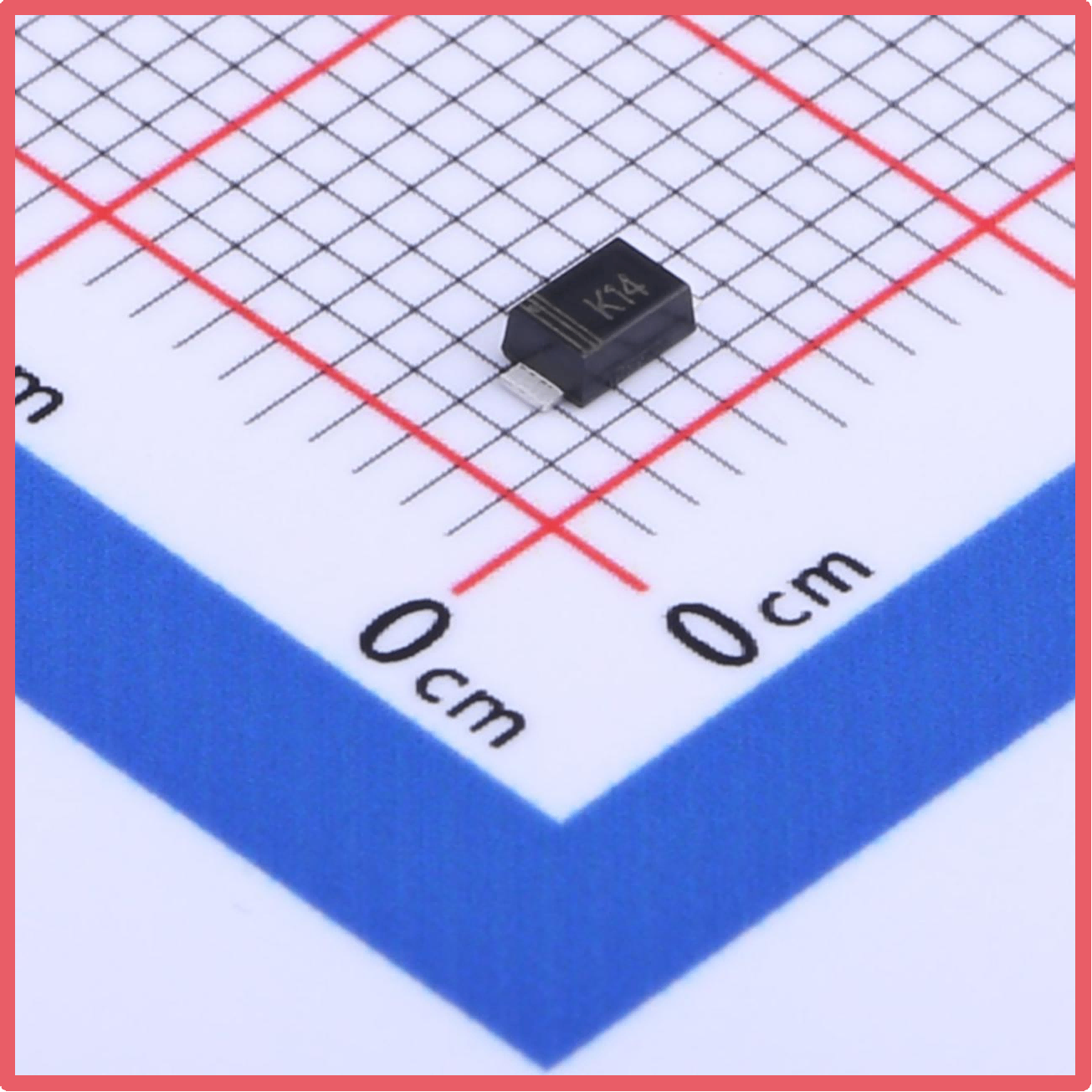
DSK14 Schottky Diode: Speed, Efficiency & Stability – Three Core Advantages Paving the Way for High-Efficiency Electronics
2026-07-21
2245
With rapid advancements in technology, seamless operation of every smart device relies on the coordinated performance of countless precision electronic components. As the "heart" of electronic systems, semiconductor devices directly determine the efficiency and reliability of equipment. The DSK14 Schottky Diode launched by Slkor Semiconductor is a high-performance component centered on three core strengths: speed, efficiency and stability, injecting new momentum into power management, high-frequency signal processing and other fields.
Speed: The High-Speed Performer for High-Frequency Era
In high-frequency scenarios such as 5G communications and high-speed digital circuits, component response speed dictates signal processing efficiency. Boasting an ultra-short reverse recovery time, the DSK14 Schottky Diode stands out as the speed leader in high-frequency circuits.
When a circuit switches from ON to OFF state, conventional diodes suffer delays caused by charge storage effects. By optimizing structural design and material manufacturing processes, the DSK14 minimizes this delay to nearly zero. This enables ultra-fast state transitions in RF signal rectification, switching power supplies and other applications, cutting signal distortion and energy loss while delivering a cleaner signal environment for high-frequency equipment.
DSK14 SOD-123FL Package
Efficiency: Energy-Saving Specialist for High-Efficiency Power Conversion
Against a backdrop of surging global energy demand, boosting power conversion efficiency has become a critical priority. Thanks to its low forward voltage drop, the DSK14 is an ideal choice for high-efficiency power supply designs.
When current flows through a diode, traditional components waste substantial energy as heat due to high voltage drop. The DSK14 only generates a 550mV forward voltage drop at 1A operating current, drastically cutting energy dissipation. For instance, integrating the DSK14 into switching power supplies or power adapters reduces heat generation, elevates overall conversion efficiency, extends device battery life and lowers thermal management costs – offering robust support for green energy applications.
DSK12-DSK120 Datasheet Electrical Specifications
Stability: Reliable Partner for Long-Term Continuous Operation
Reliability is a core competitive edge for semiconductor components. Adhering to stringent manufacturing processes and quality testing standards, Slkor ensures the DSK14 maintains consistent performance during prolonged operation.
Its 40V DC reverse blocking voltage and 1A average rectified current cover most industrial and consumer electronic application requirements. In motor control systems, the DSK14 responds rapidly to current fluctuations to deliver precise regulation. In solar inverters, it withstands voltage swings to guarantee stable energy conversion. Furthermore, its low leakage current of 500μA at 40V reverse voltage demonstrates minimal leakage under high-voltage conditions, safeguarding safe equipment operation.
DSK Series Characteristic Curves
Application Scenarios: All-Rounder From Lab Equipment to Daily Electronics
The DSK14 delivers outstanding versatility beyond theoretical parameter performance:
Power Management: Serves as the core rectifier for switching power supplies, improving energy efficiency and enabling smaller device form factors.
Signal Processing: Its superior high-frequency performance makes it the top pick for RF circuits and high-speed digital circuits.
Motor Drive Systems: Rapidly responds to control signals for efficient speed regulation.
Solar Inverters: Reduces energy loss to raise overall power generation efficiency of photovoltaic systems.
Whether deployed in industrial machinery, consumer electronics or new energy sectors, the DSK14 acts as an invisible core driver advancing technological innovation.
Design Tips to Maximize DSK14 Performance
While the DSK14 delivers premium performance, optimized circuit design is essential to unlock its full potential:
Observe the component’s maximum rated current and voltage ratings to avoid overloading.
For high-frequency applications with heat buildup risks, install heat sinks or optimize PCB layout to keep component temperatures within safe operating limits.
Minimize circuit trace lengths to reduce parasitic inductance that impairs switching speed.
Refer to Slkor’s official full datasheet and adjust parameters according to specific application scenarios for optimal performance.
Slkor Semiconductor: Empowering Innovation Through Technology
As an innovator in the semiconductor industry, Slkor Semiconductor upholds the core philosophy of "Quality First, Technology-Driven". We deliver high-performance electronic solutions through advanced manufacturing workflows and rigorous quality control.
The launch of the DSK14 Schottky Diode embodies this commitment: it is far more than a discrete component, but a tangible representation of Slkor’s dedication to efficiency, reliability and technological innovation.
Amid the ongoing tech revolution, the DSK14 Schottky Diode has become the preferred component for high-frequency and high-efficiency electronic designs, driven by its unique advantages of speed, efficiency and stability. Engineers pursuing peak performance and industries focused on sustainable development can both draw technological breakthrough inspiration from this device. Moving forward, Slkor Semiconductor will continue to fuel innovation, develop more high-performance "invisible core components" for the global electronics industry, and usher in a new era of higher efficiency for technology and daily life.
About Slkor Semiconductor
Slkor’s high-end product portfolio includes Silicon Carbide (SiC) Diodes, SiC MOSFETs, IGBTs and 5th-Generation Ultra-Fast Recovery Power Diodes, catering to new energy vehicles, high-end machinery, communication power equipment, solar photovoltaics, medical devices, industrial automation and other industries.
Our general-purpose product lineup covers Schottky diodes, ESD protection diodes, TVS transient voltage suppressors, general diodes and transistors. Power devices include low/medium/high voltage MOSFETs, thyristors and bridge rectifiers. Supporting components feature power management ICs (LDO, AC-DC, ADC), Hall sensors, high-speed optocouplers and crystal oscillators.
These products are widely adopted in smartphones, laptops, robots, smart home appliances, IoT devices, LED lighting, 3C electronics, wearable smart devices and full-spectrum connected hardware.
Website: www.slormicro.com
Vision: Become a leading enterprise in the semiconductor industry
DSK14 To Product Page

Research on Huaqiangbei “Shanzhai Phones” (Part Ⅱ)
2026-05-18
2901
— Song Shiqiang, SlkorDuring the development of Huaqiangbei, "Shanzhai phones" became a topic that could not be ignored. In 2007 alone, the shipment volume of Huaqiangbei Shanzhai phones reached 150 million units, accounting for one-sixth of the world’s total mobile phone production that year. The rise and fall of Shanzhai phones happened rapidly. It created many millionaires from the tiny "one-meter counters" in Huaqiangbei, but it also led to tragic stories, such as the bankruptcy and mental breakdown of "Prince of Shanzhai Phones," Chen Jinling.The Shanzhai phone phenomenon also had a positive side. It helped promote Huaqiangbei’s maker culture, turning Shenzhen into a "Silicon Valley of Hardware" and a "Paradise for Entrepreneurship." It also gave birth to local mobile phone brands such as Meizu, G5, Longcheer, and Transsion. In many ways, it became the foundation of the "Huaqiangbei maker spirit" and the "Shenzhen entrepreneurial spirit."However, the Shanzhai phone industry was also in conflict with the government’s push for intellectual property protection, patent awareness, and brand development at that time. As a result, it stood at the crossroads of market growth, technological innovation, government regulation, economic development, business ethics, and legal construction. Conflicts and failures became almost unavoidable, which is why official media and many economists rarely discussed Huaqiangbei’s Shanzhai phone.Authoritative media and professional institutions, including Harvard Business Review, have studied the cases of MediaTek and the white box handset market using various business analysis models. These include SWOT analysis, Porter’s Five Forces, PESTEL analysis, VRIO analysis, value chain analysis, BCG matrix analysis, Ansoff matrix analysis, and marketing mix analysis.As a long-time witness to Huaqiangbei, I, Song Shiqiang from Kinghelm and Slkor, aim to objectively and truthfully record what I saw and experienced, restoring the real history of Huaqiangbei during that era. By applying basic theories of socioeconomics, I also hope to systematically analyze the deeper logic behind the "Huaqiangbei Shanzhai phone" phenomenon and pay tribute to an era filled with opportunity and rapid economic growth.
Shanzai! MediaTek and the White Box Handset Market Case Study Solution Analysis
Following the previous article by Mr. Song of Slkor, Research on Huaqiangbei Shanzhai Phones (Part Ⅰ), this section continues the discussion on the origin of "Shanzhai," the technological evolution of Huaqiangbei Shanzhai phones, and the two major boom periods of the industry.Ⅳ. The Wealth Miracle of HuaqiangbeiHuaqiangbei Subdistrict in Futian District, Shenzhen, possessed all the favorable conditions for the concentration of wealth and the creation of a large number of millionaires and billionaires — the perfect combination of "timing, location, and people."At the beginning of China’s reform and opening-up, the world was experiencing the third major global industrial transfer, during which manufacturing of industrial products shifted from Europe, the United States, and the Four Asian Tigers to China. This was the "right timing." Shenzhen, as one of China’s first four Special Economic Zones, enjoyed independent legislative authority, highly flexible policies, and a strategic geographic position adjacent to Hong Kong — the "Pearl of the Orient" — while also being close to Southeast Asia, home to many overseas Chinese business communities. This was the "right location." Meanwhile, large numbers of migrant workers from across China poured into Shenzhen. They had received basic education, were hardworking and disciplined, and accepted relatively low wages and benefits, resulting in low labor costs. This was the "right people."Huaqiangbei was famous for its "three abundances" — people, goods, and money. At its peak, Huaqiangbei was home to over 60,000 small and medium-sized enterprises and 40,000 self-employed businesses, with approximately 500,000 daily workers and merchants. During holidays, visitor traffic exceeded 800,000 people, and shoppers often had to queue just to enter malls such as Vanguard Department Store and Women’s World.Annual transaction volume in Huaqiangbei surpassed RMB 300 billion. Transfer fees for just one meter of counter space could reach RMB 300,000, while prime retail properties in SEG Plaza sold for as much as RMB 300,000 per square meter. Although Vanguard Department Store had a business area of only 3,000 square meters, its daily revenue once reached RMB 3 million, making it one of the world’s highest-performing retail spaces in terms of sales per square meter. Over the course of 30 years, Huaqiangbei’s economic output surged from less than RMB 2 billion to RMB 300 billion, transforming the former "Shangbu Industrial Zone" into "China’s No.1 Electronics Street." The GDP of Huaqiangbei Subdistrict in Futian District eventually rivaled that of Yuehai Subdistrict in Nanshan District, one of Shenzhen’s most renowned economic hubs.
Mr. Song of Slkor Summarizes the Wealth Phenomenon of Shenzhen Huaqiangbei
Mr. Cheng Yimu from the Shenzhen Electronics Chamber of Commerce is one of the witnesses to the history of Huaqiangbei. According to him, Huaqiangbei was originally the center of Shenzhen’s electronic information industry. At that time, the Shangbu Industrial Zone, where Huaqiangbei is located, gathered many famous electronics factories and government-affiliated institutions, including Huaqiang Sanyo TV, SED Philips, Jinghua Electronics, SEG Hitachi, and Huaqiang Electronics Factory.After China joined the World Trade Organization (WTO), mainland China rapidly became the "world’s factory." The electronics and information industry experienced explosive growth, and driven by giants such as SEG and Huaqiang, Huaqiangbei quickly rose to become "China’s No.1 Electronics Street."At the same time, in areas beyond the reach of strict government regulation, the power of the gray market also created economic miracles. The Shanzhai phone supply chain quietly developed across the Pearl River Delta before eventually evolving in Huaqiangbei into a powerful industry force. Many outsiders who came to Huaqiangbei to make a living were willing to challenge old rules and embrace disruptive innovation.The rise of Huaqiangbei’s free-market ecosystem was essentially a process of optimizing resources and driving industrial innovation. Some small business owners operating from tiny "one-meter counters" gradually became known as the first "Huaqiangbei makers." The district’s unique business model and profit-sharing culture encouraged ambitious newcomers to experiment, compete, and innovate. In an environment where "anything not forbidden could be tried," Huaqiangbei created its own era of glory.Many people also grew stronger through repeated failures and fierce business competition, eventually becoming well-known entrepreneurs. This is the "Huaqiangbei culture" summarized by Mr. Song of Slkor and Kinghelm — a culture defined by innovation, risk-taking, resilience, and pragmatism.
Huaqiangbei Was Originally a Hub for the Electronics and Information Industry — Photo Provided by Cheng Yimu
Media strategist Wang Zhigang once said, "God releases the devil, but the devil creates paradise." This reflects the sociological theory of "unintended consequences," where an original intention A eventually leads to a completely different result B within a complex and changing social environment.A well-known example is Sildenafil. It was originally developed to treat high blood pressure and angina, but later became famous for treating erectile dysfunction and improving kidney health in traditional Chinese understanding. This theory can also help explain the wealth miracle created by the Huaqiangbei Shanzhai phone industry.Now, I cannot resist giving everyone another serious-but-funny lesson about the Chinese habit of "supplementing" health. Chinese people seem to love "boosting" everything. Men focus on strengthening the kidneys, women focus on nourishing the blood, and many households keep traditional medicines like Liuwei Dihuang Pills and Wuji Baifeng Pills in their drawers. Water cups are often filled with goji berries, red dates, or cassia seeds.Children need extra tutoring, programmers need extra sleep, and elderly people hurry to supermarkets every day to stock up on free eggs for the fridge. It feels as if, without some kind of "supplement," people become mentally uneasy and physically weak.
Back in the peak years of China’s mobile phone industry, aside from the "Zhonghua Kuolian" group — ZTE, Huawei, Coolpad, and Lenovo — almost every other company had a complicated and inseparable connection with the Huaqiangbei shanzhai phone.ODM companies such as Huaqin, Longcheer, Huiye, Wingtech, Yude, HEDY, Haipai, and Tinno built massive businesses during that era, and the founders behind them largely became billionaires. Mobile phone brands including Gionee, GFive, and Transsion helped figures such as Liu Lirong, Zhang Zhixue, and Zhu Zhaojiang rise to fortunes worth billions or even tens of billions of yuan.Shanghai Moshang, a company that profited from providing "shanzhai phone" solutions, was officially registered in Shanghai, yet its manufacturing base and technical ecosystem were still deeply tied to Huaqiangbei. Design firms such as Artop and Jialantu, specializing in mobile phone exterior styling and structural design, were also located in Huaqiangbei. Beyond them were countless influential figures hidden throughout different nodes of the supply chain, whose wealth stories were all closely connected to Huaqiangbei.I has always believed that among all the industries that created billionaires in Huaqiangbei, the "shanzhai mobile phone" wave operated at the highest capacity. It was this era that made Huaqiangbei famous across China and beyond, elevating it to the pinnacle of wealth creation.
In 2012, carrying the modest savings I had accumulated from working in real estate, I returned to Huaqiangbei to seek new opportunities. At that time, Huaqiangbei was bursting with energy. During holidays, the main streets were packed shoulder to shoulder with crowds. Psy’s Korean hit "Gangnam Style" echoed through the streets and alleys, while advertisements for "Being a Woman Feels Great" shapewear underwear covered the walls. After enjoying Damu Chaoshan beef hotpot, many shop owners would head to "Cool Party KTV" for karaoke, and once the mood peaked, everyone would start dancing Psy’s famous "horse-riding dance."In order to break into Huaqiangbei’s high-end business circles, I often dressed like a polished gentleman, pretending to be a wealthy and cultured successful entrepreneur. I drove around in my third-hand BMW, with expired bottles of Moutai stored in the trunk, while enthusiastically explaining theories such as the "Kondratiev Cycle" and the "Fibonacci Golden Curve" to Huaqiangbei’s businesswomen. I even added the ancient business wisdom of Fan Li — "measuring surplus and shortage, distinguishing righteousness from profit" — as a finishing touch. People began to feel that Huaqiangbei still had its share of intellectuals.At first, the Huaqiangbei businesswomen remained cautious, suspecting that I was selling training courses, insurance, direct sales products, or cosmetic surgery services. But by discussing topics such as the characteristics of the integrated circuit industry, large-scale manufacturing, supply chain structures, geopolitical influences, and Huaqiangbei’s role as both an "inventory reservoir" and a critical intersection between production and sales, I gradually summarized several principles for rapidly building wealth in Huaqiangbei. Over time, they began to trust me.One businesswoman followed my theoretical model, made a fortune through electronic component trading, and bought herself a Bentley. She later gave me a Bentley car model as a gift — to clarify, it was a miniature Bentley model car, not a female Bentley sales representative, so don’t get the wrong idea. At that moment, I quietly realized to myself: coming back to Huaqiangbei this time had absolutely been the right decision.
Huaqiangbei has hosted several waves of wealth creation, where even the "one-meter counter" shop owners’ wives caught a glimpse of its fortune trajectory. In the 1980s, it was imported electronic "junk"; in the 1990s, MP3s, MP4s, and computer assembly; today, 3C digital products and trendy electronic gadgets. Recent years have seen shortages of capacitors, resistors, MOSFETs, and memory chips; high demand for brands like Texas Instruments (TI), Silans, and STMicroelectronics; and disruptions from events such as the Thailand floods, the Japan earthquake, and the US-China tariff conflicts — all of which helped Huaqiangbei’s bosses and their wives make substantial profits.After striking their first pot of gold in Huaqiangbei, these entrepreneurs continued to grow and strengthen their businesses. Figures such as Wang Li of Haon Optics, Gao Yunfeng of Han’s Laser, Chen Zhilie of EVOC Intelligent, Cai Huabo of Jiangbolong, Song Shiqiang of Kinghelm and Slkor, Wang Laobao of Interling, and Chen Haisheng of Meilong, have all carved out distinct positions in their respective industries. They grew strong through hands-on experience in Huaqiangbei, driven by its culture of boldness, innovation, resilience, and pragmatism.
"Shanzhai Manufacturing and Maker Entrepreneurs"
Ⅴ. Huaqiangbei Mobile Phone Specialized MarketsThe commercial landscape of Huaqiangbei is primarily composed of three major sectors: daily consumer shopping areas, the "Electronics Street," and specialized markets. Department stores and shopping malls such as Maoye, Rainbow, Dreams-on, and 9square serve consumers within a half-hour living radius. The "Electronics Street" is centered around Huaqiang Electronics Market, SEG Plaza, New Asia, and Metropolis Electronics City. Specialized markets cover sectors like foreign trade clothing, watches, security products, computer malls, telecommunications, and gifts, with over 50 markets exceeding 50,000 square meters at their peak.It is said that Pony Ma initially assembled computers in Huaqiangbei before founding Tencent, and Huang Zhang of Meizu once sold MP3 players there. At the time, Huaqiangbei had several major markets for mobile phones and peripheral products: Yuanwang Digital City on Huaqiang Road, Mingtong Mobile Accessories Market on Huafa North Road, and Tongtiandi, Longsheng, and Feiyang Times Markets in the podium floors (1–3) of Huaken Building on the south side of Shennan Road, which were relatively smaller in scale. Huaqiangbei’s "shop in front, factory in back" model brought together manufacturers of small household appliances and 3C digital products from across the country, alongside nationwide and global sales channels. This convergence of supply chain and distribution networks forms a key hub and is the core competitive strength of Huaqiangbei
At that time, the first to third floors of Yuanwang Digital City in Huaqiangbei were almost entirely filled with stalls selling shanzhai mobile phones. Today, only a few counters remain tucked away in the corners of the second and third floors, but many of the old trading practices are still preserved. Typically, on the glass countertop of a one-meter-wide stall, there would be one or two laminated A4 sheets listing available phone models, specifications, and prices. Deals were negotiated directly at the counter, while bulk deliveries would be arranged at separate locations to ensure security.Yuanwang Digital City mainly sold smuggled Hong Kong-version and U.S.-version phones, as well as refurbished devices. The refurbished brands were primarily Nokia, Motorola, Samsung, and other major international brands. Meanwhile, markets such as Mingtong Mobile Market, Tongtiandi Market, Longsheng Mobile Market, and Feiyang Times Market mainly specialized in shanzhai phones.In Huaqiangbei, almost every type of refurbished phone could be found. Naturally, all device identification codes had already been altered. Matching phone motherboards and compatible software were also readily available. Once the casing and cover panels were assembled, technicians would flash the software onto the device, perform a quick functional test, and the phone was ready for sale. Add a leather case and a few accessories, and the product could immediately be pushed into the market in large quantities.
Shanzhai Mobile Phone Counters in Huaqiangbei
Behind every counter stood a gray-market supply chain. For example, since mobile phones in Hong Kong were often cheaper than those in Huaqiangbei, they were smuggled into Shenzhen through various channels. Along Shatoujiao’s Chung Ying Street — with one side belonging to Hong Kong and the other to Shenzhen — smugglers on the Hong Kong side would hide flip phones inside the inner tubes of off-road bicycles. The bicycles would then be ridden across into Shenzhen, where the phones could be delivered to Huaqiangbei and sold for profit. A 26-inch bicycle inner tube could conceal up to 25 mobile phones.Refurbished phone motherboards for brands such as Nokia were collected from developed countries and secretly transported into China through various channels. Meanwhile, the domestic supply chain already had complete support for phone casings, numeric keypads, and related accessories.Of course, some counters and merchants specialized in spare parts for feature phones and 3C digital products, while others focused on repairs and after-sales service. I remember that the after-sales repair centers for ZTE phones and Philips phones were located in SEG Science & Technology Park and the Modern Window Building respectively.
Slkor ISO9001 Quality System & ISO14001 Environmental System Certification
The business conducted through Huaqiangbei’s "one-meter counters" was supported by a massive sales network behind the scenes. There were distribution and agency channels reaching across mainland China, as well as international trading networks built over many years. One unique phenomenon was the "Huaqiangbei backpackers" — buyers from all over the world carrying backpacks as they came to Huaqiangbei for sourcing, purchasing, or bulk procurement. According to unofficial statistics, during its peak period, as many as 7,000 foreign visitors came to Huaqiangbei every day to purchase goods, inspect products, or place wholesale orders.Large quantities of shanzhai phones and other 3C digital products from Huaqiangbei were continuously exported to countries and regions such as India, Vietnam, the Philippines, Africa, and South America. This extensive sales network, in turn, drove the growth of a complete industrial chain behind Huaqiangbei’s 3C digital products, including repair services, upgrades, accessories, and related support industries. Products such as Bluetooth earphones, mobile phone leather cases, screen protectors, and refurbished laptops became increasingly comprehensive, while constant upgrades and iterations kept the market aligned with the latest trends.In the early days, the production cost of a Huaqiangbei shanzhai phone was around 700 to 800 RMB per unit, while the selling price could exceed 1,000 RMB. With larger production volumes, costs dropped further and profits became even more substantial. Around 2012, however, high-end smartphones led by Apple and Samsung emerged, and Huaqiangbei’s shanzhai phone supply chain struggled to keep pace technologically. Many companies could only barely survive.Then came Xiaomi, founded by Lei Jun, with the Redmi smartphone launching at a shockingly low price of 799 RMB. It rapidly captured most of the market previously occupied by Huaqiangbei’s shanzhai phones, dealing the industry a devastating blow and effectively sending it into the ICU. Huaqiangbei’s shanzhai phone businesses were left with only a few choices: move elsewhere, upgrade and transform themselves, or be completely swept away by the tide of the market.
Ⅵ. The Gray Ecosystem of "Huaqiangbei Shanzhai Phones"Huaqiangbei has always carried a kind of inherited "Shanzhai DNA." In its early days, the SEG Electronics Market mainly sold assembled computers and peripheral products, and a very high proportion of components were either Shanzhai (third-party) or refurbished parts. People in the industry even had a specific name for Shanzhai computers—they called them "compatible machines."It is said that the founder of the Hedy computer brand started his business by selling these compatible machines in Huaqiangbei. The founder of Hasee Computer, Wu Haijun, also reportedly began by trading hard drives in the same area. At that time, the Shanzhai computer market mainly revolved around refurbished motherboards from brands like GIGABYTE, Acer, and ASUS, along with second-hand memory modules from Samsung and Kingston, and hard drives from Seagate. These low-cost but functional combinations made the business extremely active and gradually formed a gray ecosystem centered in Huaqiangbei and spreading across the Pearl River Delta.In the early stage of Shanzhai mobile phones, peripheral industries were still relatively limited. However, with the rise of smartphones, the ecosystem quickly expanded. Early smartphones such as iPhones were fragile and had weak battery life, which directly led to the rapid growth of supporting industries like protective cases and power banks. At the same time, companies developing charging chips and related components also emerged.As smartphones became more powerful and mobile applications (apps) exploded in popularity, the peripheral product ecosystem continued to expand. A complete commercial loop formed around accessories such as charging cables, phone straps, and decorative items, and these booths became extremely profitable.In 2013, while I was running a Hong Kong-style tea restaurant near Foxconn in Longhua—trying to scale Hong Kong-style milk tea using a McDonald’s-style chain model across China—I noticed that some Foxconn employees were quietly involved in unusual activities.Their operation model was roughly like this: during night shifts, employees involved in pilot production would secretly take out prototype Apple devices. Accomplices waiting outside would collect them, quickly pass them to nearby manufacturers for molding, duplication, and parameter replication, and then return the samples before the morning shift change. Because of this, within just a few days of a new iPhone launch, Huaqiangbei could already produce Shanzhai versions of the same model, along with a complete set of matching accessories.Core components such as Shanzhai phone motherboards, due to their high value and higher risk, were traded in a much more hidden and mobile manner. Behind this chain, there was often a key "underworld big boss" who acted as an intermediary, organizing relationships, controlling resources, and stabilizing prices to protect profit margins while also ensuring the safety of participants. Each link in the chain typically maintained single-line contact to reduce exposure.These motherboards were often transported in vans such as JAC or Jinbei minibuses, which would continuously circulate around major Huaqiangbei mobile phone markets. Transactions would be finalized inside the vehicle or after the vehicle stopped nearby once a deal was agreed.A friend who ran an SMT assembly factory once told me that at the peak of the Shanzhai phone era, each motherboard he processed generated a net profit of about 15 RMB. His factory could produce around 10,000 units per day, bringing in about 150,000 RMB daily. When the cash was collected, he felt an almost overwhelming sense of achievement, like becoming the pride of his hometown. This situation lasted for several months. Later, as money accumulated too quickly, he even began to worry about whether he could "hold onto it," and eventually considered withdrawing from the industry entirely.
In the Chinese TV drama The Knockout, Gao Qiqiang says, "The bigger the storm, the more expensive the fish." The same was true for the shanzhai phone industry centered around Huaqiangbei’s supply chain ecosystem. Those who entered early and timed the market correctly became wealthy, creating countless millionaires and billionaires. Others, however, suffered devastating failures — some lost both their businesses and families, like Chen Jinling; some were framed or sabotaged by rivals and ended up in prison "working the sewing machines," like a certain mobile phone tycoon surnamed Zhang who had once come from ZTE.As more and more people flooded into the industry chasing profits, the methods became increasingly ruthless, and the reality grew harsher. There were even stories of buyers hiring gangsters armed with knives and guns to seize shipments of certain motherboard models at the Feiyang Shidai Market in order to monopolize supply. Meanwhile, the former SMT factory owner mentioned earlier now spends his time posting photos on WeChat Moments of fishing trips, sunshine, and outings with his young girlfriend.Behind Huaqiangbei’s shanzhai phone industry stood not only underground players, but also major mainstream technology companies. Around 2006, MediaTek and Spreadtrum Communications introduced turnkey solutions for shanzhai mobile phones in Huaqiangbei. At the same time, suppliers such as GalaxyCore with its CMOS image sensors, RDA Microelectronics with the RDA5800 chip integrating RF and digital processing functions, along with Telegent Systems and FocalTech, all shipped products in massive volumes through Huaqiangbei.In 2013, Maxscend developed a low-power GPS LNA solution that was first tested and validated in several shanzhai smartphones in Huaqiangbei before eventually entering Samsung’s official supply chain. In many ways, Huaqiangbei’s shanzhai ecosystem also helped nurture and accelerate the growth of China’s electronics industry.Of course, not everyone involved in the shanzhai phone business made money. The owner of Hongfu Chaoshan Restaurant on Huaqiang South Road sold his restaurant and invested everything into the declining shanzhai phone market, only to lose it all in the end. I still remember the excellent taste of their braised beef brisket hotpot with tofu skin, and the owner’s warm smile as he handed me cigarettes.Chen Jinling, once nicknamed the "Prince of Huaqiangbei Shanzhai Phones," attempted to monopolize a best-selling phone model by stockpiling huge amounts of inventory. After his cash flow collapsed, his family fell apart and his mental state deteriorated. Today, he is often seen wandering aimlessly around Huaqiangbei.Song Shiqiang from Kinghelm and Slkor will soon release Research on Huaqiangbei "Shanzhai Phones" (Part Ⅲ) — stay tuned!
Slkor Hall Sensor SL1613SH for Industrial and Consumer Electronics
Author IntroductionMr. Song is a popular science lecturer of the Chinese Institute of Electronics, a member of the Electronic Information Expert Database of the China Association for Science and Technology, a science columnist, and a well-known researcher of Huaqiangbei’s commercial ecosystem.The companies he invests in and operates include Shenzhen Slkor Semiconductor Co., Ltd. and Shenzhen Kinghelm Electronics Co., Ltd.. The brands "SLKOR" and "Kinghelm" have already gained recognition and reputation in international markets.Under the brand slogan "Kinghelm Connects the World," Kinghelm Electronics started with the development of Beidou/GPS navigation positioning antennas. The company has since expanded into microwave antennas, RF cable assemblies, and electrical signal connectors, actively embracing the era of the Internet of Everything and intelligent connectivity.Meanwhile, Slkor focuses on the development of semiconductor devices such as diodes, transistors, MOSFETs, and IGBTs, as well as sensors and related power devices. Together, these product lines serve more than 30,000 customers worldwide, providing both components and supporting technical solutions across industrial and consumer electronics applications.
Mr. Song of Kinghelm and Slkor Awarded "Huaqiangbei Maker Mentor" Title
Huaqiangbei representative figure Mr. Song is not only an entrepreneur who successfully founded two high-tech companies—Shenzhen Kinghelm Electronics Co., Ltd. and Shenzhen Slkor Semiconductor Co., Ltd.—but also a long-term independent researcher and cultural observer of Huaqiangbei.For more than a decade, he has continuously tracked and studied the evolution and transformation of Huaqiangbei from a Folk scholar perspective. As a thinker and cultural communicator, he has worked to interpret and reshape Huaqiangbei’s commercial culture, aiming to let the world better understand this unique industrial ecosystem while promoting the global presence of the "Kinghelm" and "SLKOR" brands.He was among the first to systematically define and promote the concepts of "Huaqiangbei Spirit" and "Huaqiangbei Culture." As a cultural scholar, he organized the spontaneous entrepreneurial practices of Huaqiangbei into a structured theoretical framework. He refined the cultural essence into four key values: boldness in taking risks, innovation, resilience, and pragmatism.He also summarized Huaqiangbei’s industrial upgrade path as "imitation —improvement — innovation," and proposed that each "one-meter counter" in Huaqiangbei is essentially a "unit of innovation," representing a micro expression of entrepreneurial spirit. By recognizing the value of small and micro merchants as active "capillaries" of the economic system, he helped stimulate the innovation vitality of the entire ecosystem.In addition, he proposed the survival logic of Huaqiangbei: "light assets, fast iteration, high conversion, and information-driven operations," and creatively introduced the theory of Huaqiangbei as a "reservoir of the supply chain." This theory explains how Huaqiangbei uses inventory as a buffer to regulate upstream production capacity, efficiently match supply and demand, and reduce systemic industrial risks. This idea has become one of the foundational frameworks for studying the rapid development of China’s electronics industry after reform and opening-up.Under his leadership, Kinghelm Electronics has been deeply engaged in Beidou/GPS navigation antenna technology, contributing to the development of China’s independent navigation and positioning systems. Slkor Semiconductor focuses on silicon carbide power devices, rapidly expanding in fields such as new energy vehicles and photovoltaics. Together, the two brands serve more than 30,000 customers worldwide and have become representative symbols of Chinese intelligent manufacturing going global.In addition, the official Chinese and English websites of Kinghelm and Slkor have launched the column "Interviewing 100 Outstanding Entrepreneurs in the Electronics Manufacturing Industry," promoting Chinese semiconductor and electronic component brands to the global market and encouraging Huaqiangbei-originated enterprises to participate in international competition.
General Manager Mr. Song Appointed as Lecturer in Expert Group of the Chinese Institute of Electronics
Mr. Song is a science popularization lecturer in the field of electronic information and also a columnist writer in the industry. Through various online platforms, he publishes articles that present the transformation and upgrading story of Huaqiangbei to a global audience.His research works on Huaqiangbei, including "Research on Huaqiangbei," "Transformation and Development of Huaqiangbei," and "Refuting Bloomberg’s Report on Huaqiangbei," have been widely republished by major media platforms such as the People’s Daily Online app, Xinhua News Agency, Associated Press, and Yahoo News.Through these publications, Huaqiangbei has been successfully reframed from its former stereotype as a "Shanzhai distribution hub" into a new identity as a "global hardware innovation source." Mr. Song has played an active role as both a narrator and international communicator of Huaqiangbei’s image, contributing to the improvement of its global reputation and recognition.
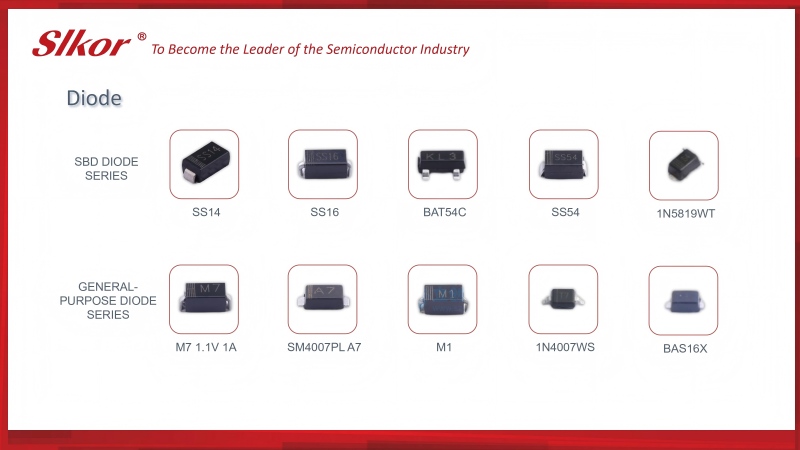
Do You Know These Twenty Types of Diodes?
2025-11-19
3789
This article introduces twenty different types of diodes, including Zener diodes, Schottky diodes, ESD, TVS and Switching diode, etc
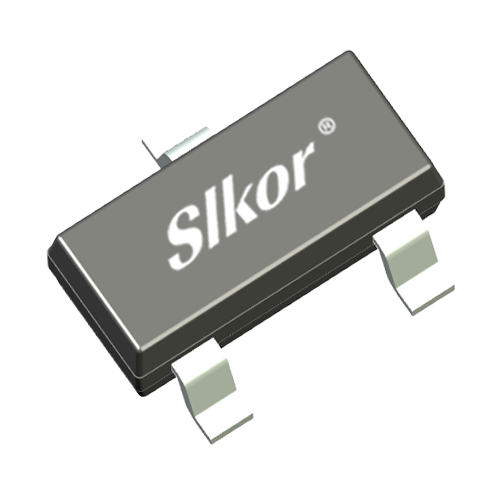
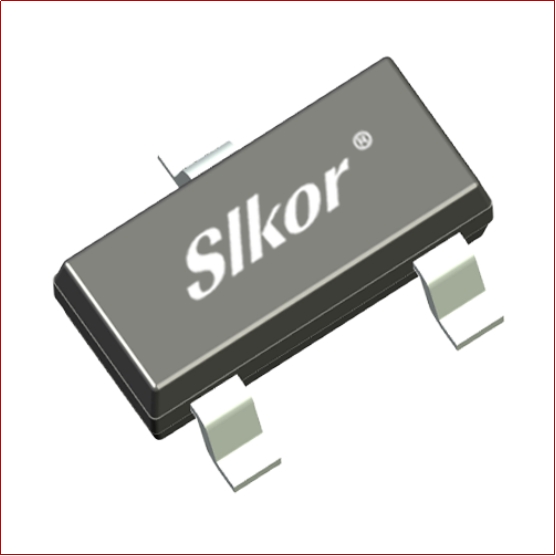
Introduction to MOSFET SOT-23 Package
2025-11-14
4052
The SOT-23 is a very common and widely used surface-mount semiconductor package, particularly suited for low-power transistors (including MOSFETs, BJTs), diodes, and integrated circuits.
Invisible Forces, Tangible Electricity: How Do Hall Sensors Work?
2025-11-10
3731
Have you ever wondered why the screen of your laptop turns off when you close the lid? Or why the screen of your smartphone rotates when you flip it over? Or how the motor of an electric vehicle can control its speed so precisely? These phenomena all rely on the work of an unsung hero—the Hall sensor.
What’s the Difference Between a MOSFET and a Bipolar Transistor?
2025-11-04
3791
When diving into the world of electronics, two types of components you’ll often encounter are MOSFETs (Metal-Oxide-Semiconductor Field-Effect Transistors) and regular transistors. These components are both essential for controlling the flow of electrical current, but they operate in different ways and serve different purposes. Let’s explore the key differences between them.
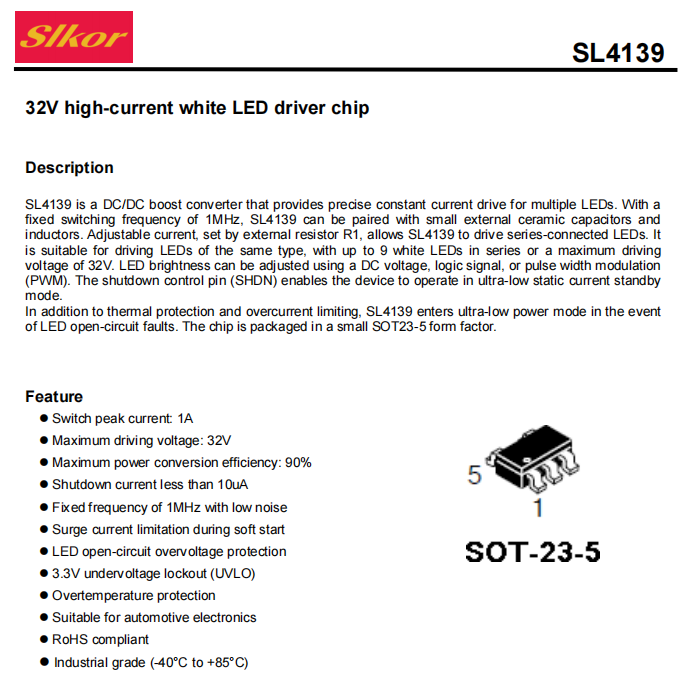
In-Depth Analysis of DC-DC Switching Regulator Quiescent Current: Definition, Characteristics, and Applications
2025-08-14
3812
Article OverviewIn this article, Slkor explores the quiescent current (IQ) of DC-DC switching regula

What is an operational amplifier?
2025-07-22
4726
?An Operational Amplifier (abbreviated as op-amp) is a direct-coupled, differential mode input, typically single-ended output high-gain voltage amplifier. It can generate an output potential (relative to ground) that is hundreds of thousands of times larger than the potential difference at the input. It got its name because it was initially mainly used in analog computing circuits such as addition and subtraction operations.
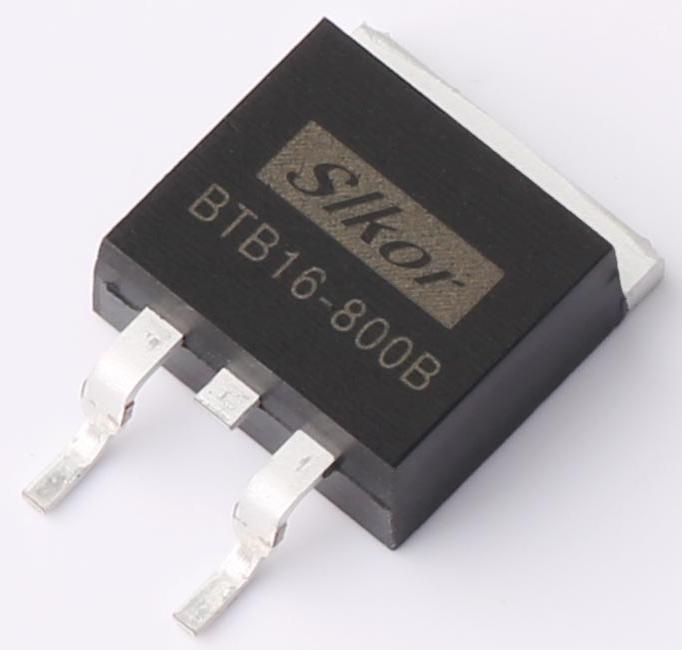
Basic Principles of Thyristors
2025-07-21
4954
Thyristor conduction conditions: First, a forward voltage must be applied between the anode and cathode of the thyristor; second, a forward voltage must also be applied to the gate.
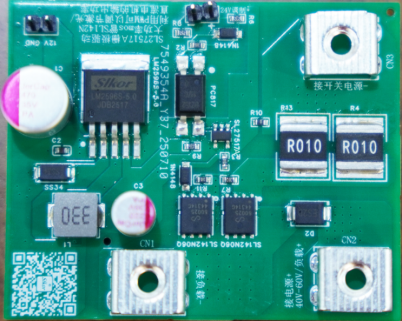
Basic Working Principle and Usage Method of Data Converters
2025-07-21
4793
?A data converter is an instrument, device, and also an electronic component. Its main function is to convert other types of electrical energy signals into another type, and can convert one type of electrical energy factor signal into another. Data conversion can be divided into two main categories: electrical energy signal conversion and electrical energy factor signal conversion. The following is a detailed introduction by AMEYA360 Electronic Component Purchasing Network: the basic working principle and usage method of data converters.
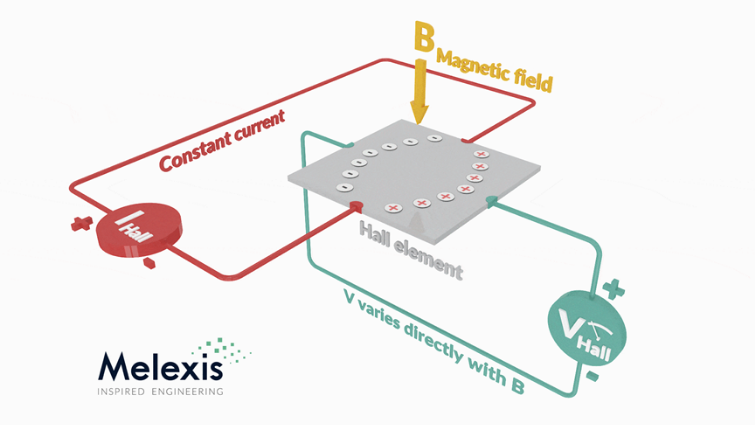
What is the principle of the Hall sensor and what is its use?
2025-07-21
4320
The Hall effect is caused by the interaction between the corresponding electric and magnetic fields of charged particles (such as electrons). For a more vivid and intuitive understanding, you can refer to the animation diagram of the Hall effect principle below.
Electrostatic Discharge (ESD) Diodes: Invisible Guardians of Circuit Protection
2025-07-18
4061
Electrostatic discharge (ESD) is a phenomenon where charge accumulated on an object’s surface is rapidly released, such as the "electrical shock" feeling when a human touches an electronic device. The voltage released in an instant can reach thousands of volts or higher, causing permanent damage to semiconductor chips. For example, when a static-charged finger touches a phone interface, ESD current may 击穿 (break down) the gate oxide inside the chip through the circuit, leading to device failure.
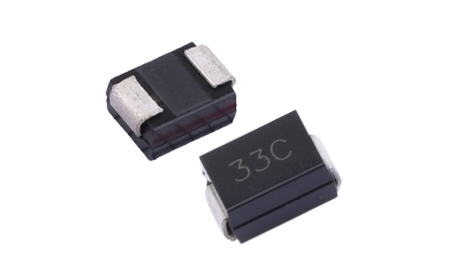
Function of TVS and the Working Principle & Application of Its Protection Circuit
2025-06-19
4130
This article explores the working principle of TVS diodes and their wide range of applications in fields such as overvoltage protection, ESD protection, and lightning surge protection, revealing their significant value as core components for circuit protection.
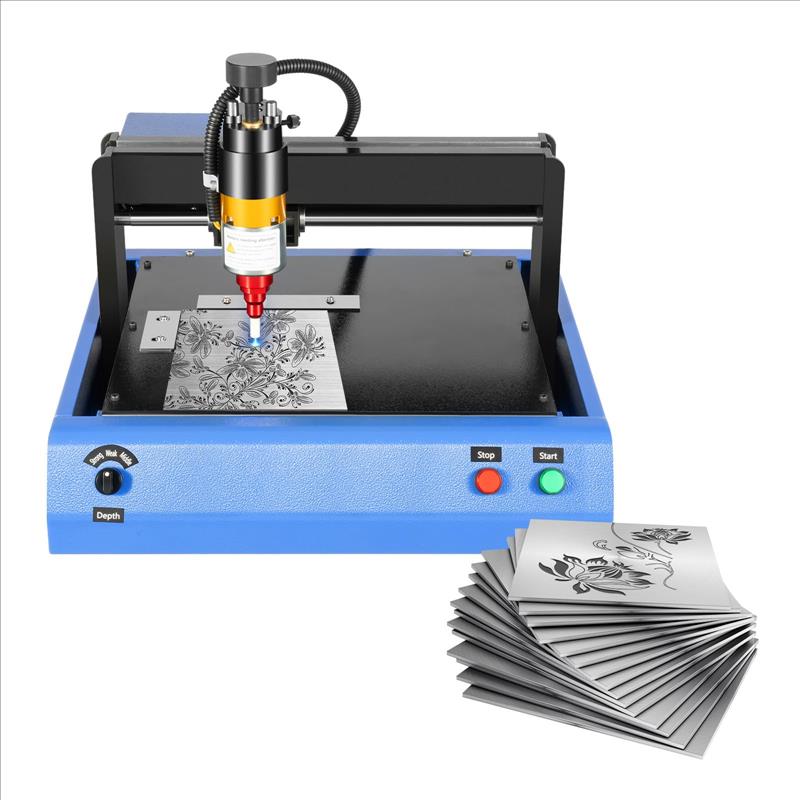
mastering Chip Etching Machines: Key Insights for Smarter Electronics Manufacturing
2025-05-16
4227
A chip etching machine is a specialized tool used in semiconductor manufacturing to selectively remove material from silicon wafers. This process, known as etching, creates intricate circuit patterns essential for modern electronics. The precision of a chip etching machine ensures components meet exact design specifications, making it indispensable in producing devices like smartphones and computers. Unlike traditional mechanical methods, advanced machines use plasma or chemical reactions for nanoscale accuracy. For example, companies such as Applied Materials and Lam Research dominate this field, offering systems that integrate automation for higher throughput. Learn more about semiconductor processes at Semiconductor Industry Association.
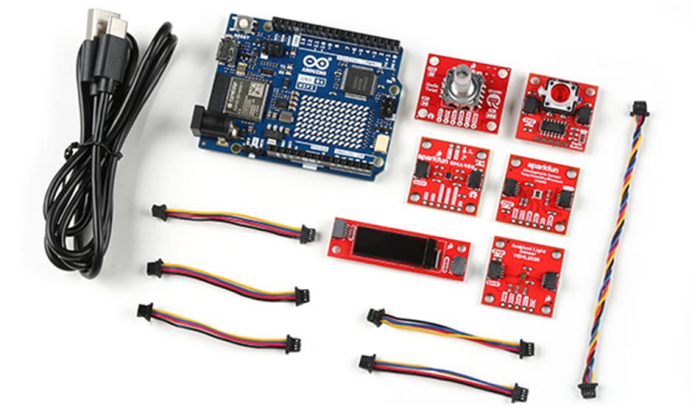
Twenty Years Later: Arduino Is Far More Than Just Arduino
2025-05-15
3868
This article explores the evolution of Arduino from an open-source hardware platform to an expanded ecosystem, highlighting its profound impact across multiple domains.
Inside Chip Design Companies: Innovations Powering Next-Gen Consumer Electronics
2025-05-13
4000
A chip design company specializes in creating integrated circuit (IC) blueprints used in devices ranging from smartphones to AI systems. These firms transform conceptual designs into manufacturable layouts, leveraging tools like electronic design automation (EDA). Unlike semiconductor foundries, chip design companies focus solely on innovation, enabling consumer electronics brands to outsource complex R&D. For procurement teams, partnering with such firms ensures access to cutting-edge technology without heavy upfront investments in design infrastructure.
From Design to Production: How Wafer Foundries Drive Consumer Electronics Innovation
2025-05-13
4050
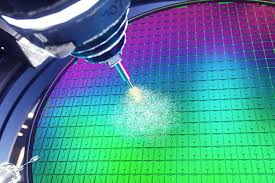
A wafer foundry is a specialized facility that manufactures silicon wafers, the foundational component of semiconductors. These facilities play a critical role in producing integrated circuits (ICs) used in devices like smartphones, laptops, and IoT gadgets. Unlike integrated device manufacturers (IDMs), wafer foundries focus solely on fabrication, enabling cost-effective scaling for consumer electronics companies. The process involves photolithography, etching, and doping to create intricate circuits on silicon substrates. For procurement teams, understanding this supply chain step ensures better vendor negotiations and quality control.
OSAT in Consumer Electronics: A Strategic Guide for Procurement & Engineering Teams
2025-05-12
4205
A Semiconductor Assembly and Testing Facility, or semiconductor assembly and testing facility, plays a critical role in the electronics manufacturing ecosystem. These facilities specialize in the final stages of semiconductor production, including packaging integrated circuits (ICs) and rigorously testing their functionality. For procurement and engineering teams in consumer electronics, understanding the capabilities of a Semiconductor Assembly and Testing Facility ensures efficient supply chain management and product reliability.





 粤公网安备44030002007346号